Malawian households are facing shrinking incomes and declining spending as rising global fuel prices triggered by conflict in the Middle East ripple through the economy, a new study has shown. The study by the Centre for Agricultural Research and Development indicates that household incomes decline from 1.11 percent under a 10 percent fuel price shock to 6.52 percent at a 50 percent shock, reflecting widening economy-wide pressures. Titled ‘Economy-Wide Impacts of Global Oil Market Disruptions on Malawi: Evidence from Middle East Conflict-Induced Fuel Price Shocks’, the study shows that urban households are the hardest hit, with income losses reaching up to 6.84 percent, compared to rural households whose incomes fall by up to 6.30 percent, partly cushioned by subsistence production.
Ironically, household consumption is seen dropping from 0.95 percent under a 10 percent shock to 5.44 percent at a 50 percent increase in global petroleum prices as overall prices increase modestly from 0.16 percent to 2.12 percent, respectively. Consequently, the national poverty is projected to rise from 0.1 percentage points to 0.5 percentage points as fuel price shocks intensify as the economy has no capacity to absorb larger petroleum price increases of between 35 percent to 50 percent. Reads the study in part: “Addressing these challenges requires a combination of short-term policy responses to cushion vulnerable groups and long-term structural strategies, including energy diversification, productivity enhancement, and strengthened social protection systems, to build resilience against future external shocks.
“Although the economy adjusts through export expansion and import compression, this rebalancing is largely involuntary and insufficient to offset domestic losses.” The Middle East remains central to global energy markets, accounting for approximately 30–35 percent of global oil supply, with the Strait of Hormuz handling about 20 to 30 percent of globally traded petroleum liquids. As one of the world’s most critical maritime chokepoints, disruptions in this corridor have immediate and significant effects on global oil prices. Consequently, geopolitical tensions in the region transmit rapidly into international fuel markets, disproportionately affecting net oil-importing, low-income countries such as Malawi.
[paywall]
Malawi needs $600 million annually to bring in fuel, but generates just around $1 billion in forex every year. In total, the country needs $3 billion for its import bill. Ironically, the centre argues that with fuel imports accounting for a significant share of Malawi’s import bill, often exceeding 15 to 20 percent of total imports, this transmission is already evident domestically with the recent fuel hike, further amplified by Malawi’s landlocked position and reliance on regional transport corridors.
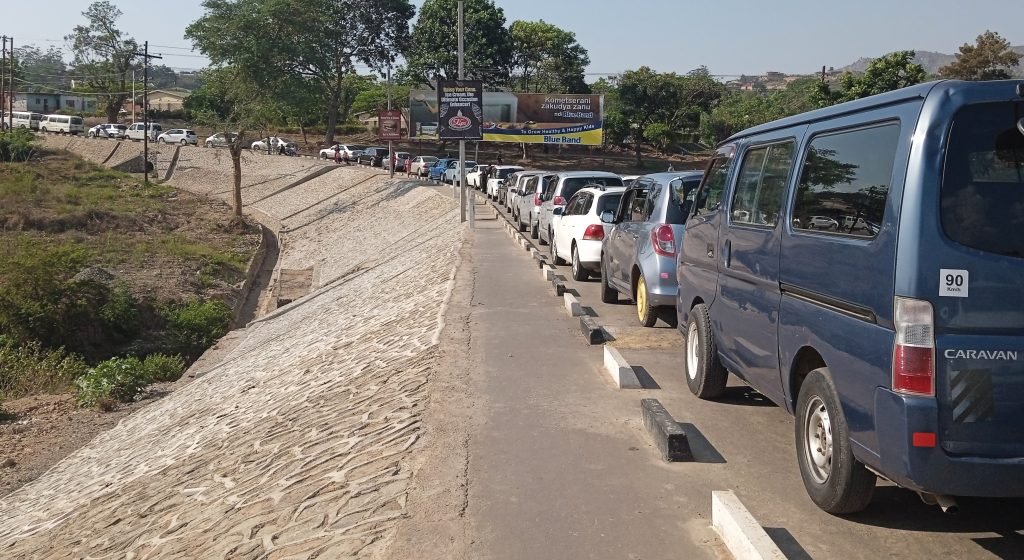
Following the adjustment, petrol has gone up by 34 percent from K4 965 to K6 672 per litre while diesel is now fetching K6 687 per litre from K4 945, a 35 percent increase. On the other hand, jet fuel now costs K5 439 per litre at Kamuzu International Airport in Lilongwe, up from K3 046, representing a 79 percent increase while at Bakili Muluzi International Airport in Chileka, Blantyre it is selling at K5 423, up from K2 993, an 81 percent hike.
[/paywall]
All Zim News – Bringing you the latest news and updates.
