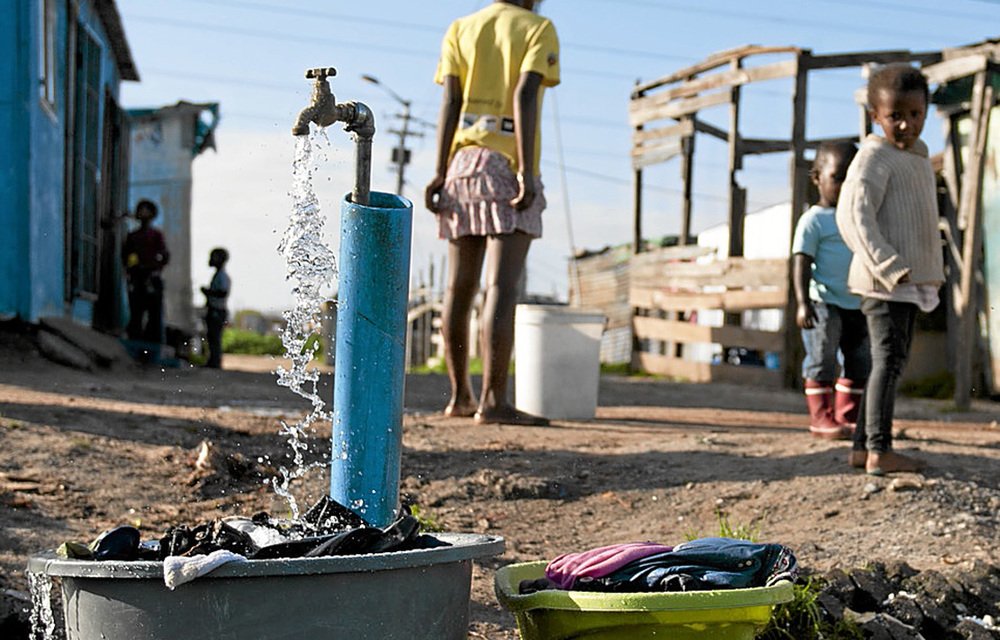
South Africa’s municipal water and sanitation systems are facing a deepening crisis, according to the 2025Green Drop report and Blue and No Dropprogress reports released by the department of water and sanitation (DWS) on Tuesday. The reports reveal that nearly half of the country’s wastewater systems are now in a critical state, while drinking water risks and water losses remain alarmingly high in several provinces. Sean Phillips, the department’s director-general, led the presentation of the findings and outlined the government’s response to the results.
The 2025Green Dropreport, which audits municipal wastewater systems, assessed 848 of these plants across 144 water services authorities (WSAs) in the 2023/24 municipal financial year, revealing a further deterioration in wastewater performance. “There has been an increase in the percentage of systems in a critical state of performance from 39% in 2022 to 47% in 2025,” Phillips said. In 2022, 334 systems were classified as critical; in 2025 that number has risen to 396.
The percentage of systems in an excellent or good state of performance has dropped from 14% to only 8%, while the number of Green Drop certifications – a mark of excellence for wastewater treatment plants in the country – has fallen from 22 to 14. The report’s data also highlights significant regional disparities. The Western Cape and Gauteng continue to record the highest percentage of wastewater systems with excellent or good performance, while the Free State and Northern Cape have the highest concentration of poor or critical systems, with the Free State’s poor or critical performance reaching 98%.
Read Full Article on Mail & Guardian
[paywall]
“By the end of February 2026, 80 out of 90 WSAs had submitted corrective action plans to address their 2022 Green Drop reports,” Phillips said, adding that the department would now be requesting all the WSAs to submit new corrective action plans to address their full 2025 Green Drop results. Technical site assessments of 158 physically sampled wastewater systems revealed that 61% of systems are incritical or poor infrastructure condition, indicating a widespread lack of investment in maintenance and rehabilitation. Major metropolitan areas, while generally performing better, are not exempt from failure.
Five of the eight metropolitan municipalities, including eThekwini, City of Johannesburg, City of Tshwane, Buffalo City and Nelson Mandela Bay, have systems classified in a critical state of performance. The department of public works and infrastructure (DPWI) also showed worrying results. Of 114 of its wastewater systems, 101 were in a critical state, and none scored above average performance. “The general poor and critical condition of DPWI wastewater systems is an indication of a lack of investment in the maintenance and rehabilitation of wastewater infrastructure,” Phillips said, noting that KwaZulu-Natal, Northern Cape, and Eastern Cape were the worst performing DPWI regions.
[/paywall]
All Zim News – Bringing you the latest news and updates.
