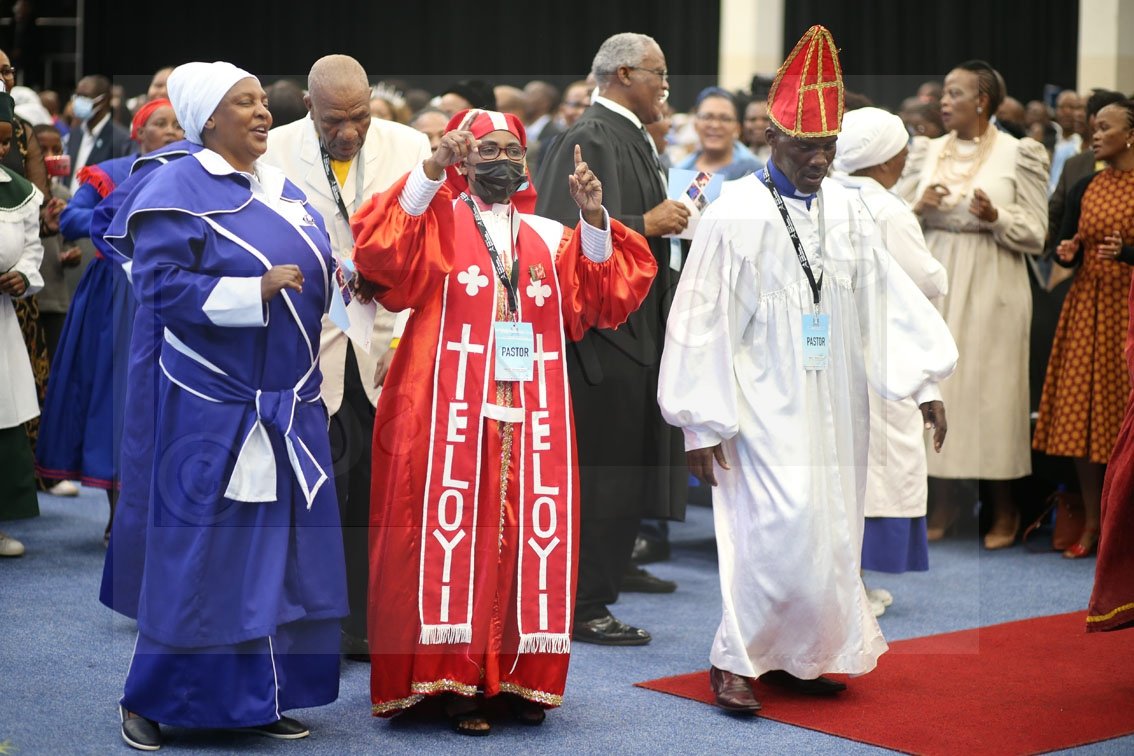
Religious leaders across all societies are set to regain the autonomy to lead by faith rather than by degree, following government’s decision to withdraw mandatory theology qualifications. In a statement delivered in Parliament recently, Minister of Labour and Home Affairs, Major General Pius Mokgware explained that by replacing academic requirements with universal security vetting, government was moving away from overregulation to strike a balance between national security and the constitutional right to religious freedom. “By easing the educational threshold and shifting focus to security vetting, government aims to strike a better balance between protecting national security and the integrity of non-profit organisations on one hand and preserving religious freedom and freedom of association on the other,” the Minister said.
He said government was planning to amend the regulations under the Societies Act 2022 to repeal the stringent educational requirements previously imposed on religious societies. The minister explained that the 2022 amendments to the Societies Regulations had required spiritual leaders of religious organisations to possess a minimum accredited certificate in Theology from an institution recognised by the Botswana Qualifications Authority (BQA), along with a release letter from any previous religious society. He said the measures were introduced to uphold the fit and proper principle and protect the public from exploitation by unqualified or unscrupulous individuals posing as religious leaders.
However, he noted that internal reviews found such educational criteria had not meaningfully contributed to compliance with the Financial Intelligence Act or improved the overall integrity of faith-based institutions. “These criteria do not add value to compliance and effectiveness requirements of the Financial Action Task Force (FATF) rating,” he stated. He added that the original requirements were part of Botswana’s efforts to address FATF Recommendation 8 on non-profit organisations (NPOs) and the risks of terrorism financing.
Read Full Article on Daily News Botswana
[paywall]
“While they helped improve Botswana’s rating from Non-Compliant to Largely Compliant, government now seeks to achieve fully compliant status ahead of the third round of mutual evaluation in January next year.” Again, Minister Mokgware said the proposed amendments included repealing Regulation 4(3) in its entirety to remove the theology qualification and release letter requirements for spiritual leaders of religious societies as well as replace the term “security clearance” with “security vetting” in Regulation 4(2)(vi) for office-bearers and extend security vetting to board members and office-bearers of all societies, not just religious ones. “Security vetting requirement will apply universally because criminals can abuse any form of society for terrorism financing. The changes aim to better align with Section 49(1) of the Financial Intelligence Act, which seeks to prevent criminals from holding controlling or management positions in societies,” he added.
Mokgware further told Parliament that the amendments fell within the minister’s authority under the Societies Act and did not require new parliamentary legislation. “Botswana is preparing intensively for the 2027 FATF/ESAAMLG mutual evaluation and will continue to demonstrate effective, risk-based and proportionate regulatory measures that do not unduly burden legitimate civil society and religious activities,” he said. In his comment, Francistown West MP, Mr Ignatius Moswaane, welcomed the development, saying it would uphold the integrity of pastors who had received a divine calling to lead churches. Mr Moswaane added that the introduction of security vetting for individuals with malicious intent would help secure churches and give believers confidence to exercise their faith without worry.ENDS
[/paywall]
All Zim News – Bringing you the latest news and updates.
