A new international study co-authored by a University of Pretoria (UP) conservation scientist is challenging one of the most widely cited claims in global environmental debates: thatwildlife populations have declinedby more than 70% over the past 50 years. Drawing on detailed data from sub-Saharan Africa, the study’s authors argue that the narrative of uniform, catastrophic biodiversity collapse does not reflect the on-the-ground reality — and might even harm effective conservation efforts. Published inScience Advances, thestudy, titled “Out of Africa Comes No Support for Global Biodiversity Catastrophes”, finds that many species often cited as emblematic of global decline are stable or increasing where they are properly protected and managed.
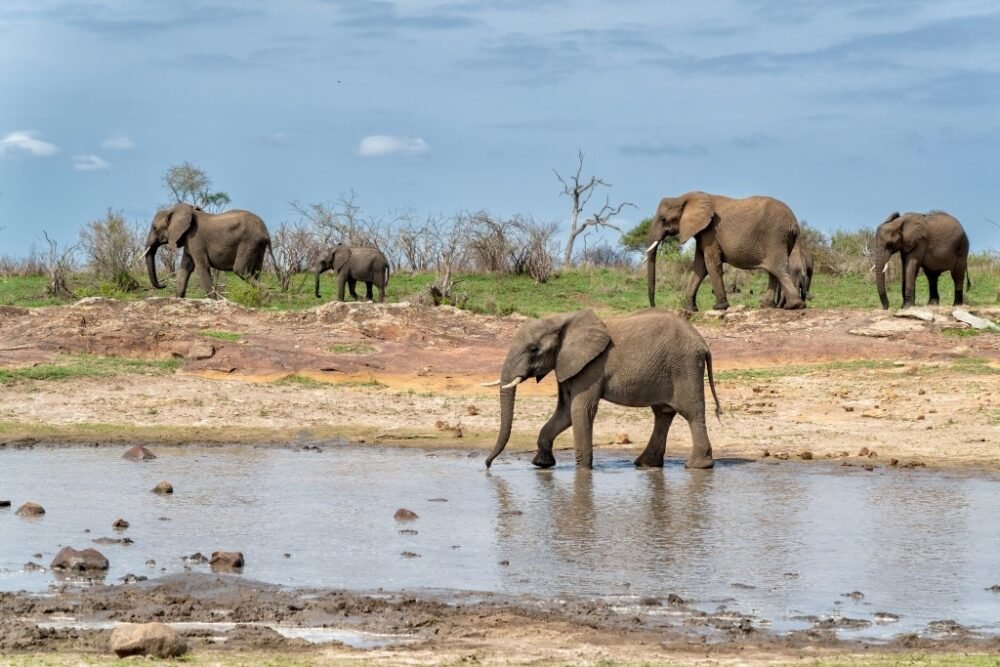
Referring to the widely publicised global wildlife loss claim, lead author Stuart L Pimm,extraordinary professorat UP’s Conservation Ecology Research Unit (Ceru) and theDoris Duke professor of conservation at Duke University, said: “It’s not even remotely true.” “For example, in the [WWF]Living Planet Report 2024, the graph showing the supposed year-by-year inexorable decline in wildlife uses a little elephant as the symbol to plot the data. “In fact, Southern Africa, by which we mean the middle of Tanzania southwards, holds 75% of savannah elephants and they are slightly more numerous than they were 25 years ago,” he said. The study critiques global biodiversity metrics, including theLiving Planet Index(LPI) and the evolving planetary boundaries for biodiversity integrity.
The indices, the authors argue, are “inappropriate [and] misleading”. “While the state of biodiversity is dire, we must separate alarmist claims based on abstract, theoretical or hypothetical conjectures from more concrete claims based on carefully documented, empirically derived evidence,” they noted, cautioning that only the latter can inform conservation practice. Sub-Saharan Africa, where the human population has grown three-and-a-half times over the past 50 years — by far the fastest growth of any continent — and where some of the world’s most impoverished people live, provides what the researchers describe as a “stress test” for global claims of ecological collapse.
Read Full Article on Mail & Guardian
[paywall]
If biodiversity tipping points and planetary boundary transgressions were unfolding as dramatically as some global narratives suggest, they should be especially visible in Africa’s savannahs. To show that the data do not support the “tipping point” and “collapse” assertions, they examined terrestrial data from Africa. Although per capita consumption in Sub-Saharan Africa might be relatively low, globalisation — the export of palm oil and other commodities to richer continents, for example — must also affect its environments. “Surely, the transgression of the biosphere’s planetary boundaries should be most evident here, especially in African savannahs, as a 2024 report confirms and where we would expect definitive catastrophic declines in wildlife populations.”
[/paywall]
All Zim News – Bringing you the latest news and updates.
