A farmer wakes to loud silence. Not the quiet of a rural morning, but the absence of something that had been there the night before—the sparkle of solar panels in his irrigation field. He walks to the field anyway.
What remains is a stripped metal frame. Six months of savings gone. He stands there for a long time.
The panels that were supposed to free him from diesel cost have made him a target. This experience has played out across Malawi. Those lucky to keep their solar panels faced another frustration: Electricity-powered pumps in the fields while homes remained dark.
[paywall]
In Mchesi Township in Lilongwe, Brighton Zelemoti, a young agriculture graduate, kept hearing the same story. “They would say ‘solar works’, but only works in the field when I am there. When I am not around , it gets stolen.
It was solving one problem while creating two others,” he says. Driven by that contradiction, Zelemoti, then 26, founded Favoa Innovations and Investments Group. The team did not reinvent solar technology.
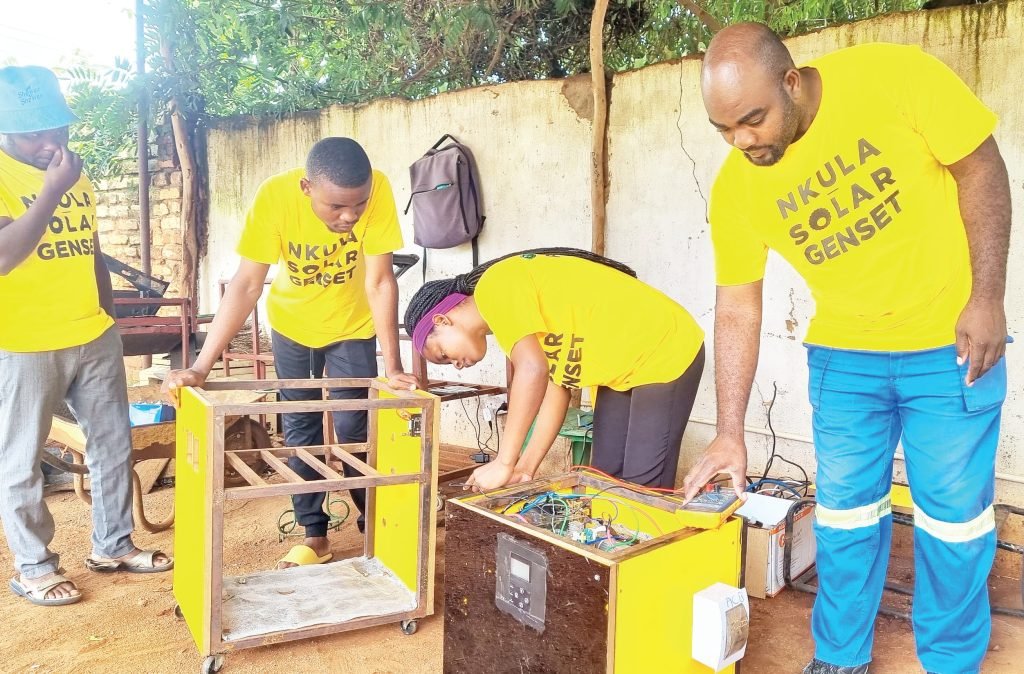
They rethought its use. “We asked ourselves: What if the panels never left the house?” The answer was simple: Solar panels installed at the farmer’s home or a supervisor’s residence, where they are safer. The energy is stored in a portable unit that can be taken to the farm to power pumps and later returned home to supply electricity.
“Farmers did not need more sophisticated panels,” Zelemoti says. “They needed a system that fits their reality, with security built into the design.” The innovation, named the Nkula Solar Genset, quickly proved its value. Farmers reported improved returns as the same investment powered both irrigation and household needs.
Children could study at night. Phones stayed charged. Theft became far less likely.
A practical problem has found a practical solution. Demand grew. Then came interest from larger institutions.
But instead of scaling, the enterprise stalled. “The questions changed,” Zelemoti says. “It was no longer ‘Does it work?’ but ‘Is it certified? Is it safe?’”
[/paywall]
All Zim News – Bringing you the latest news and updates.
