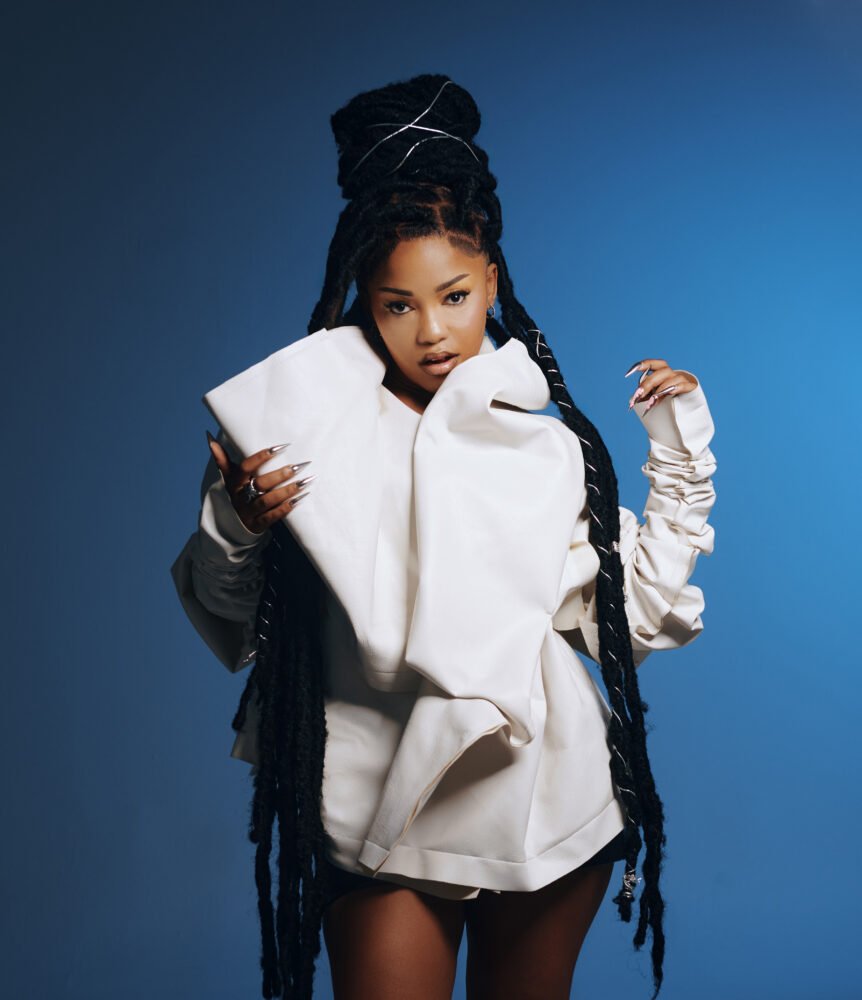
After running around all morning, I am finally settled by my laptop, going through the questions I prepared the night before. I do not get through the first five when Google Meet asks me to admit my guest. Zee Nxumalo’s manager asks that we cap the meeting at 20 minutes.
I don’t hesitate — she is a star and she is busy. A question for me? Panic sets in briefly but I am open.
“We are working on titles for my upcoming EP. Do you think it should be in English or Zulu? I am sitting with my team and we are trying to figure that out.
Read Full Article on Mail & Guardian
[paywall]
What do you think?” she asks. Suddenly, I am part of the team, not that my opinion matters but it is an unexpected entry point into a conversation that refuses the stiffness of a traditional interview. It is disarming.
It is generous. It is perhaps also indicative of the kind of artist Zee Nxumalo is becoming: one who is not only building a catalogue but actively negotiating identity in real time. At 23, Nxumalo occupies a rare position in South African music, both a product of a digital moment and a shaper of it.
Her rise from viral breakout to cultural mainstay has been swift but not accidental. There is, in her trajectory, the unmistakable imprint of a generation that understands the elasticity of genre, the currency of relatability and the necessity of reinvention. Her sound, an intuitive blend of Afropop storytelling, amapiano’s rhythmic elasticity and contemporary dance sensibilities has allowed her to move between spaces with ease: the club, the radio, the algorithm. But more than that, it has allowed her to remain legible to a young audience that recognises itself in her, not in perfection but in process.
[/paywall]
All Zim News – Bringing you the latest news and updates.
