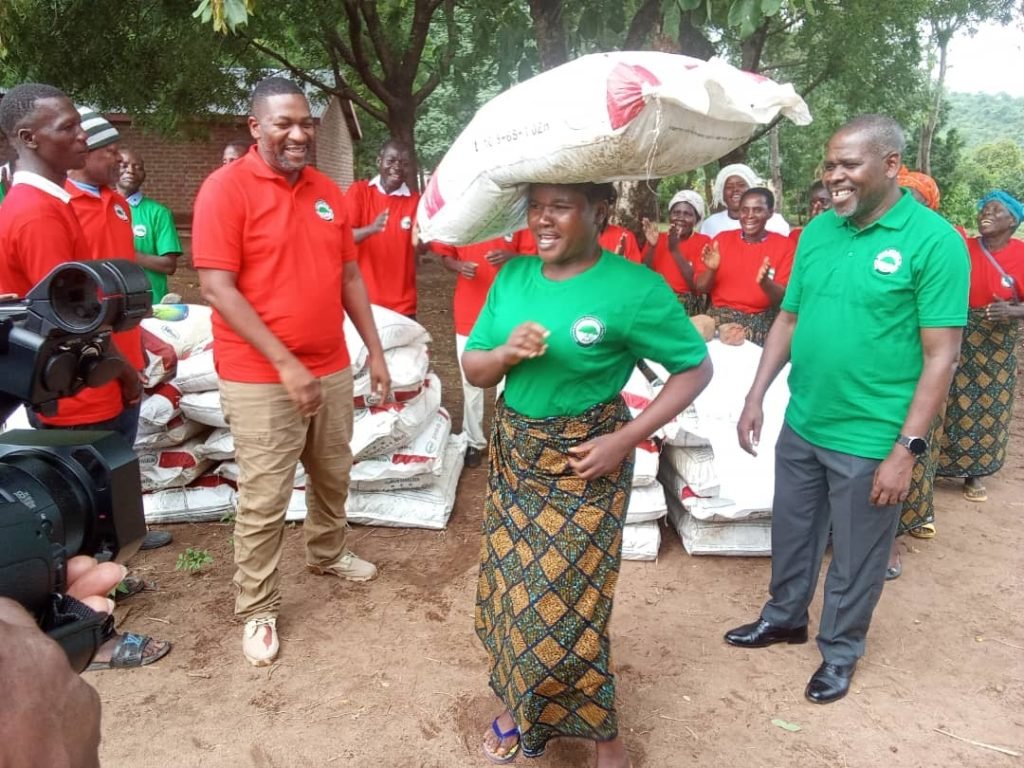
A farmer who buys a tractor on credit tends to guard it carefully. The machine tills his land, generates income and provides a clear incentive to repay the loan used to buy it. But a farmer who receives fertiliser on credit, especially when it arrives through a government programme, may treat it differently.
Once he harvests the crop, the obligation to repay can fade into the background. The contrast captures a growing debate about Malawi’s State-backed lending institutions: whether they are expanding financial access for the poor or drifting into politically-exposed subsidy Loan recovery data from three government-linked lenders suggest sharply different outcomes depending on how the programmes are designed. An analysis of the Malawi Enterprise Development Fund (Medf), the Export Development Fund (EDF) and the Malawi Agricultural and Industrial Investment Corporation (Maiic) shows stark differences in performance.
Medf, formerly the National Economic Empowerment Fund (Neef), recovers roughly 48 to 52 percent of the loans it disburses, while EDF records recovery rates of about 85 percent. The disparity highlights a broader issue confronting Malawi’s development finance architecture: whether State-backed credit schemes can balance social objectives with financial discipline. Analysts say the answer often depends less on government ownership than on how lending institutions are structured and insulated from political pressure.
[paywall]
Governance experts Wi l ly Kambwandira and Jimmy Lipunga said in separate interviews this week that the contrasting recovery rates suggest political exposure may be a key driver of loan defaults in State-run institutions. Developments at Maiic, where government shareholding was capped at 20 percent to guard against political exposure, underline this difference. Loans issued for capital equipment and long-term investment recover about 94 percent.
But seasonal agricultural input loans, largely financed by Maiic itself, or other government agencies, recover only 37 to 44 percent. The figures have reopened a policy debate about whether government-run credit schemes are effectively supporting underserved entrepreneurs or struggling under the weight of political and institutional pressures. State-backed lending institutions were originally designed to address a structural gap in Malawi’s financial system.
Large segments of the population, particularly rural households, smallholder farmers and microentrepreneurs, remain outside formal banking because commercial lenders often consider them too risky to finance. According to the 2023 FinScope Survey, only 29.1 percent of adult Malawians had access to formal financial services. About 34.6 percent had access to formal and semi-formal services, while 46.1 percent had access to all financial services, including informal channels.
[/paywall]
All Zim News – Bringing you the latest news and updates.
