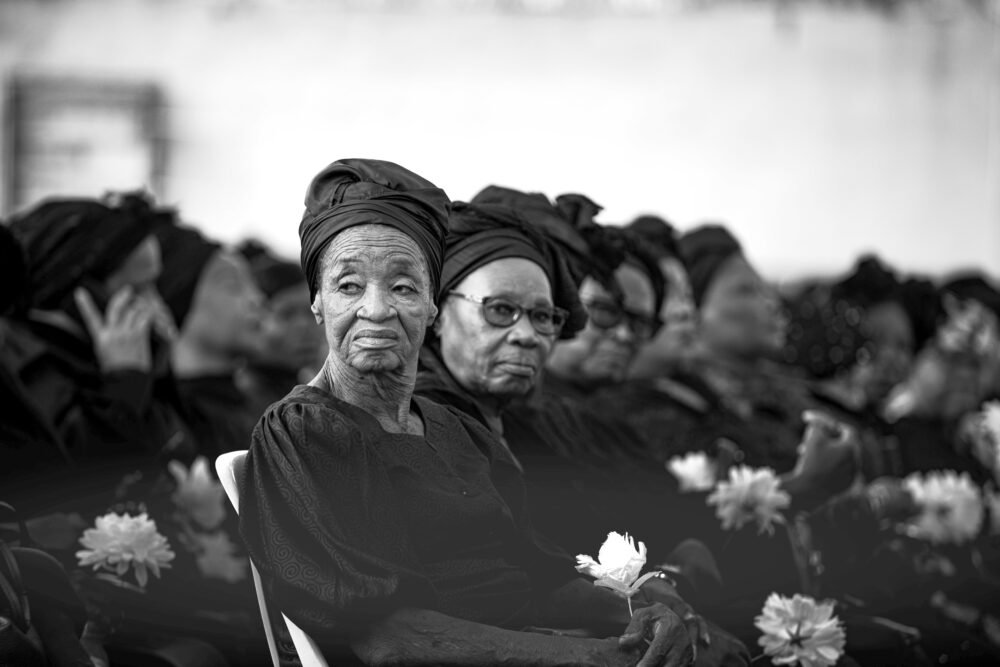
Some memorials arrive late, not because the love was absent but because the heart needed time. Grief has a way of hiding in the corners of our busy lives. We bury it beneath meetings, deadlines, public appearances and the noble insistence that we must “be strong.” We learn to function.
We learn to perform. We even learn to laugh. But grief is patient.
It waits for silence. I have watched grief up close. I have watched it through the eyes of my own mother, who buried not one, not two but four of her children.
Read Full Article on Mail & Guardian
[paywall]
Four times she stood at the edge of an unimaginable loss. Never mind her siblings, her parents, her grandparents, grief has been a frequent visitor in her life. Yet she rose each time.
Not untouched, not unscarred but upright. From her, I learned that grief does not disappear because we ignore it. It softens when we sit with it.
It becomes bearable when we give it time. As a nation and as individuals, we must make time to grieve, because ungrieved pain becomes inherited pain, the kind of inheritance we should never pass on to the next generation. Left unattended, it seeps into families, shapes behaviour and silently damages the future we are trying to build.
There is a way we find refuge from mourning. We distract ourselves. We move cities.
We change jobs. We scroll endlessly. We convince ourselves that strength means silence.
But strength is not the absence of tears. Strength is the courage to feel. This truth came back to me unexpectedly as I listened toStay Realby DJ Fresh, Kyllex and Thabiso Sikwane.
The song is more than melody; it is memory. As it played, it did something profound, it brought her back to life in the most dignified way. Not as an echo of sorrow but as a presence of conviction.
Her voice did not sound like the past. It sounded like an instruction. In that simple refrain was her entire philosophy.
Thabiso, Ausi, as I called her, was unapologetically authentic. She gave herself fully to every cause she embraced. Her love for literacy was not performative; it was transformative. Through Literacy4Life and other initiatives we worked on together, she championed children’s books as instruments of dignity.
[/paywall]
All Zim News – Bringing you the latest news and updates.
