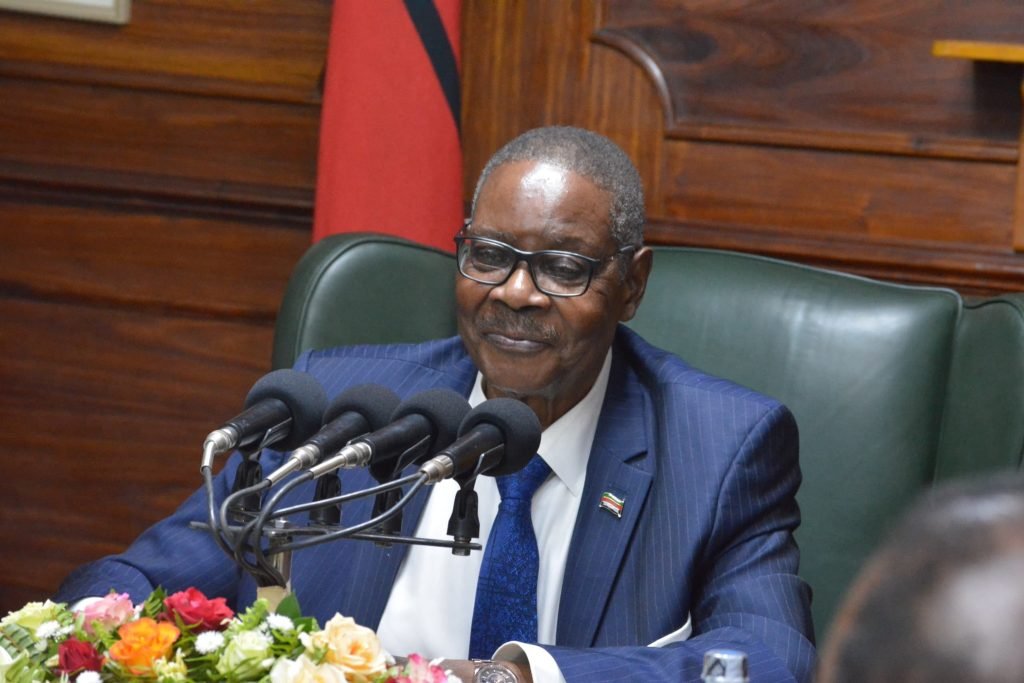
President Peter Mutharika has issued an Executive order calling for urgent action to address appalling sanitation and hygiene facilities in public, workplaces and schools amid a surge in cholera cases. In the Order Number 2 of 2026 dated March 1 2026, the President, who is in South Africa on a private visit, said this was influenced by the need to mitigate threats posed by waterborne diseases arising from inadequate sanitation and hygiene. Reads the order: “All public places, including but not limited to markets, bus depots, car parks, recreational facilities and venues for public gatherings shall provide and maintain waste disposal facilities.
“All schools and workplaces, whether public or private, shall provide and maintain waste disposal facilities within and surrounding premises.” Reacting to the order last evening, Malawi 2063 Environmental Sustainability champion and environmental rights activist Mathews Malata said it addresses most of the critical issues the country has struggled to manage on hygiene and general waste management. He said it will be worthwhile if the public and private sector players embrace the order and act, noting that besides lacking political will, Malawi has not had proper coordination among different players. Said Malata: “We need to bring all the stakeholders together and clearly examine some of the bottlenecks that have brought us here.
We have also not been budgeting enough for hygiene services and waste management, we need to put resources in place. “We are counting on, for example, city councils and local government structures to enforce the order, and to deal with that, our councils must have the capacity. If they don’t have the capacity, definitely the order will also not make sense.” Malawi Local Government Association (Malga) executive director Hadrod Zeru Mkandawire said the President’s order has set a high-level tone in enforcing sanitation and hygiene in public spaces in the country.
[paywall]
He said: “The order will further facilitate effective enforcement of bylaws that most of the councils enacted on the subject matter. The biggest challenge has been lack of enforcement mechanisms and absence of strong penalties for lack of compliance. “As local authorities, we need to leverage on this Order to incentivise ourselves to ride on this order as a mechanism of enforcing existing by-laws on sanitation and hygiene, and, in the absence of the same, enact relevant by-laws.” From the education perspective, Civil Society Education Coalition executive director Benedicto Kondowe said local authorities, school management committees, and workplace regulators must be empowered and required to conduct regular inspections.
Kamuzu University of Health Sciences professor of epidemiology and public health Adamson Muula said the order was timely, noting that in many public places, there are no sanitation places such as toilets. “It is also the state in which the bathrooms are! I would guess the Minister of Health and Sanitation will ask for timelines because markets will not produce toilets tomorrow or something like that when funding needs to be obtained,” he said.
[/paywall]
All Zim News – Bringing you the latest news and updates.
