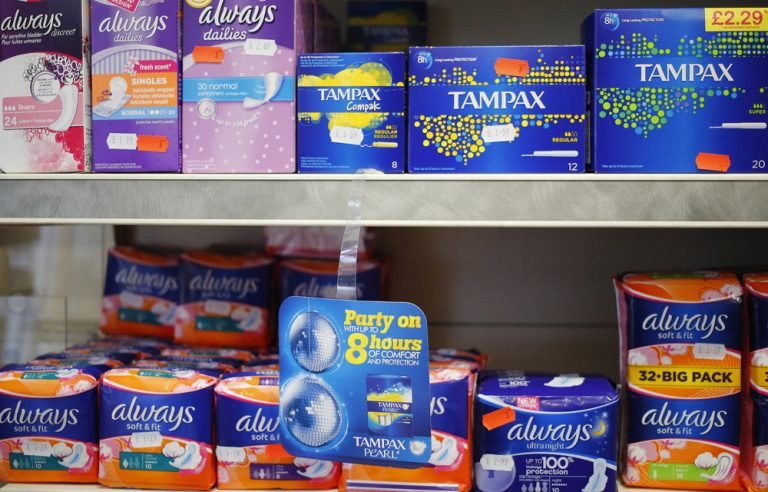
A woman in South Africa might use thousands of sanitary pads and pantyliners over her lifetime, yet new research has warned that the products couldexpose her to hormone-disrupting chemicals. The groundbreakingresearchby the University of the Free State (UFS), published last week inScience of the Total Environment, revealed that pads and pantyliners sold on the local market containedendocrine-disrupting chemicals(EDCs) such as phthalates, bisphenols and parabens — even when marketed as “free from harmful chemicals”. Its findings have triggered anational conversationabout safety, regulation and consumer rights, prompting the National Consumer Commission (NCC) to launch an investigation into leading manufacturers.
“A healthy woman menstruates about 450 times in her lifetime, on average,” the head of the UFS chemistry departmentDeon Vissersaid. “Over five to seven days each month, depending on the flow, she may use five to seven pads a day. You’re talking about a hell of a lot of pads here per woman.” While the chemicals were not intentionally added, they could migrate into products during manufacturing from plastics, adhesives, packaging materials or even contaminated water, the researchers said.
Pads were hot-pressed during production, which could facilitate thetransfer of trace chemicalsto the layers that came into direct contact with skin. The NCC has since launched an investigation into several suppliers whose products were analysed, including Kimberly-Clark (Kotex), Procter & Gamble (Always), Johnson & Johnson (Stayfree), Essity (Libresse), Lil-Lets, Anna Organics, Comfitex, Flo and My Time. The inquiry seeks to assess compliance with the Consumer Protection Act, which requires products to be reasonably suitable for their intended purpose, durable and free from defects.
Read Full Article on Mail & Guardian
[paywall]
Suppliers have been asked to submit test results and the commission will determine whether product recalls are warranted. Acting commissioner Hardin Ratshisusu called the matter a priority, saying the findings “raise serious concerns affecting women and girls”. The study’s authors said that while the levels detected in a single product might appear small, the concern lay in repeated exposure over time.
Menstrual products came into contact with mucosal tissue, which absorbed chemicals more quickly and directly than normal skin. The results, the authors said, underscored the urgent need for rigorous safety assessments and the establishment of regulatory standards to ensure that menstrual products “are both effective and free from unnecessary chemical risks”. While the analysed sanitary pads and pantyliners fall within international limits, “we don’t have limits in South Africa and that’s what the study kind of called for,” Visser said, adding: “We’ve already engaged with the NCC and the South African Bureau of Standards (SABS) on Monday.
“We had a fantastic meeting and we will definitely continue this meeting because the SABS have been looking at chemical testing in sanitary wear for two years now. There’s an ISO standard that’s being developed, so they are busy with it but now we can also inform the process.
[/paywall]
All Zim News – Bringing you the latest news and updates.
