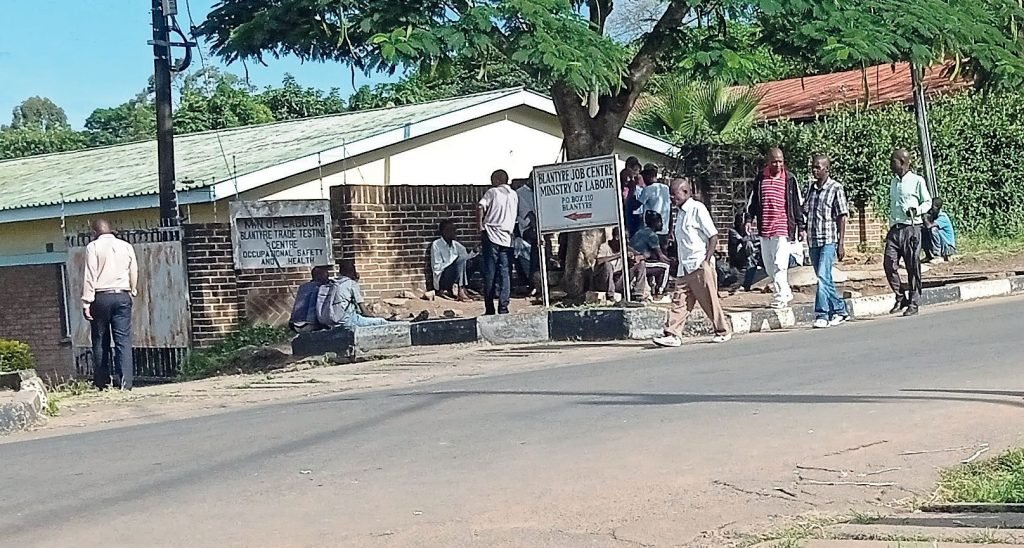
Majority of Malawians have no access to social security benefits despite strides Malawi has registered to expand social protection, a recent labour market profile has shown. Published by the Danish Trade Union Development Agency, the profile shows that coverage is largely limited to formal sector workers, leaving informal workers, comprising roughly 90 percent of employment. Reads the profile in part: “While Malawi has expanded social protection through non-contributory programmes, central social insurance schemes remain underdeveloped.
“This gap contributes to a persistently high poverty rate of 72 percent and challenges in targeting social safety net programmes, which sometimes benefit wealthier groups more than the intended poor.” Comparative data on the proportion of population covered by social protection services in Malawi and Southern Africa show that the population covered by at least one social protection benefit in Malawi is at 20 percent while against the region’s 59 percent average. Malawi’s employment injury schemes coverage is about 27 times lower than regional average at 1.5 percent against the region’s 40 percent average while the population of unemployed receiving unemployment benefits is at zero, the region’s average stands at 13 percent. Meanwhile, the Malawi 2025 Commitment to Reducing Inequality Profile data shows that the country’s social protection spending is low, dropping from 5.7 percent to 2.3 percent of the National Budget within two years, ranking among the lowest in Southern Africa.
The situation, according to the Malawi Economic Justice Network (Mejn), can exacerbate poverty, widen inequality and increase social unrest. Mejn executive director Bertha Phiri said to avert the situation, there is need to diversify the economy and ensure that income-generating sectors are supported to increase domestic revenue mobilisation. “Lower social spending can also widen income inequality, potentially leading to social unrest and decreased economic growth,” she said.
[paywall]
Despite the implementation of the National Social Support Programme as the prior guiding policy, over 50 percent of the Malawian population still live below the poverty line, with 20.4 percent classified as ultra-poor. According to the National Social Protection Policy (2024/29) framework, social protection is essential for addressing poverty and vulnerability as it helps less privileged citizens access services, builds resilience to shocks and improves livelihoods enabling citizens to live with dignity. The policy also aligns the implementation of social protection with the United Nations Agenda 2030 on Sustainable Development Goals, the African Union Agenda 2063’s vision for transforming Africa into a global powerhouse and also the Southern African Development Community’s Regional Indicative Strategic Development Plan.
[/paywall]
All Zim News – Bringing you the latest news and updates.
