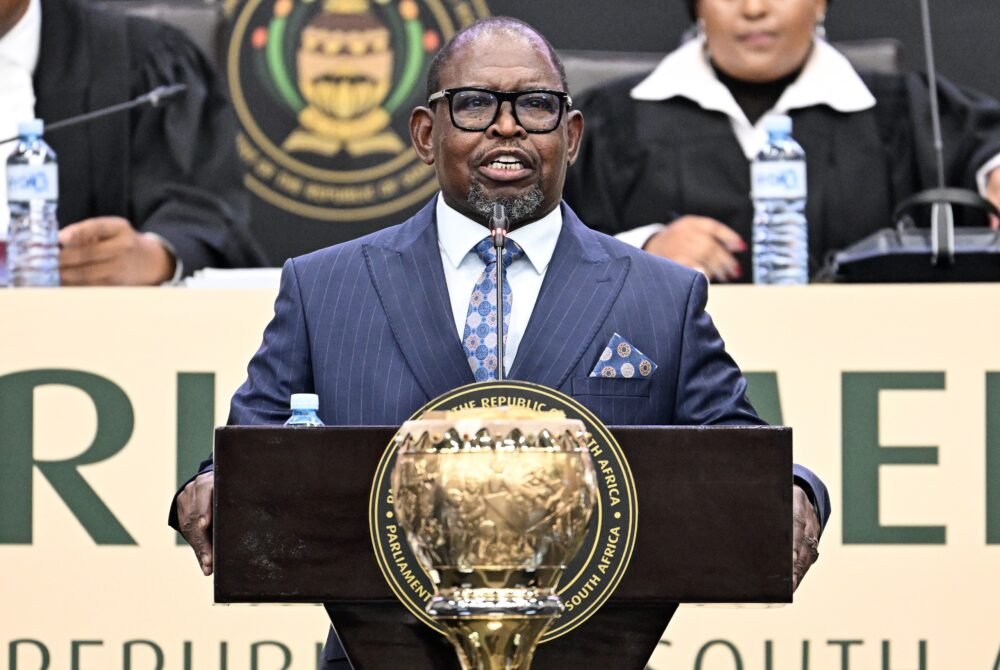
South Africa has waited nearly two decades for a moment like this — a national Budget that does not merely patch over crises, recycle warnings about “tough choices” or postpone the inevitable. Instead, Finance Minister Enoch Godongwana walked into Parliament carrying something far heavier than his leather briefcase: the burden of a country exhausted by pandemic trauma, global downgrades, collapsing infrastructure and years of economic drift. For the first time in 17 years, the numbers point to a stabilisation of public finances.
In a political climate where trust is thin and patience even thinner, that alone is a remarkable achievement. But the deeper question lingers: is this a genuine turning point or simply a pause in the long decline of state capacity? A Budget built on stabilisation — at last: The headline achievement is clear and overdue.
Debt stabilises for the first time since the Mbeki era. Borrowing requirements fall dramatically from R563 billion to R380 billion. Debt service costs — the silent thief of the democratic dividend — finally ease.
Read Full Article on Mail & Guardian
[paywall]
For a country that has been borrowing to survive rather than to build, this is both symbolic and substantive. Yet stabilisation is not transformation. It is the fiscal equivalent of stopping the bleeding, not healing the wound.
South Africa has bought itself time — but time is not the same as progress. Speaking to the Mail & Guardian from Cape Town, where he attended Sona and Budget Day, Stanley Subramoney, Group CEO of Menstons Holdings and former Deputy CEO of PwC, captured the essence of the moment: “In essence, the minister delivered a budget of consolidation and not transformation.” “It was realistic and grounded in fiscal arithmetic, with a cautious and prudent fiscal stance, bracket creep that quietly erodes household purchasing power, renewed emphasis on blended finance infrastructure, reaffirmation of debt stabilisation targets and continued support for social grants, without permanent expansion.” These reforms will not dominate headlines but they matter in townships, rural economies and the informal sector — the real engines of job creation. The social wage still dominates — as it should: A striking 60% of the R1.95 trillion Budget goes to the social wage: education, healthcare, grants, community services. R26 billion is earmarked for HIV/AIDS programmes.
[/paywall]
All Zim News – Bringing you the latest news and updates.
