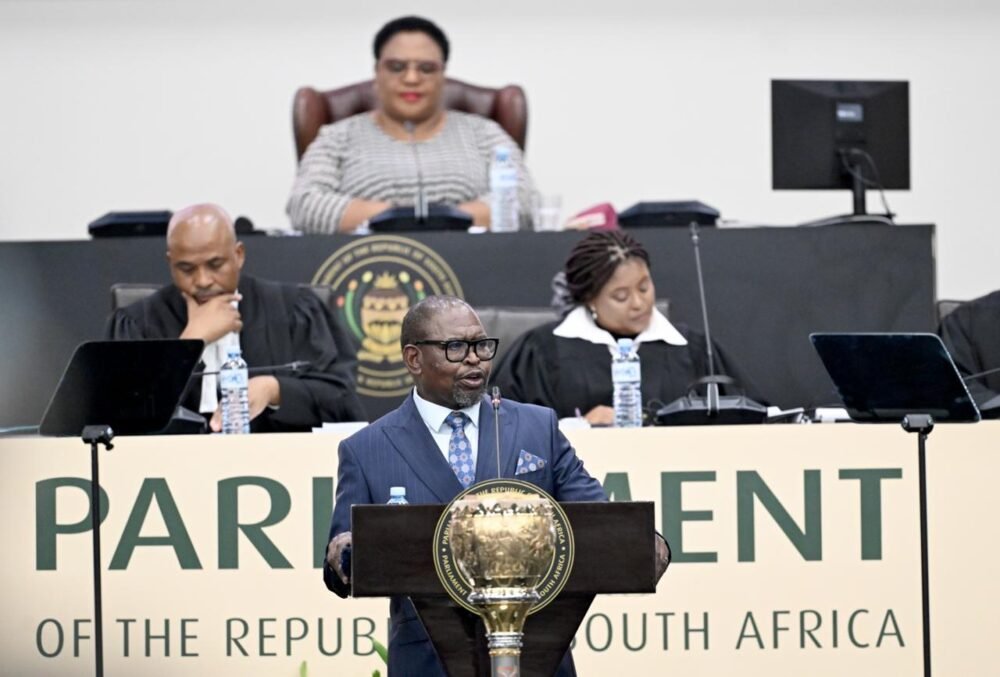
After last year’s torrid budget process in which the ANC was confronted with the reality of being in a national coalition government and unable to bulldoze its proposals through parliament as it had done for nearly three decades, Enoch Godongwana emerged unscathed this year. This time around, the stars seem to align for Godongwana — debt is stabilising after nearly 20 years, although at 78.9% of GDP it’s too high. Economic growth is gathering pace after wallowing around 1% for most of the past decade.
Kudos to the treasury for improving the efficiency of government spending by implementing the targeted and responsible savings initiative, announced last year, to shift funds from ineffective programmes to priority projects without increasing the spending ceiling. It has identified R12 billion in wasteful programmes. Godongwana presented the budget against the backdrop of South Africa’s recent exit from the Financial Action Task Force greylist which had identified weaknesses in its systems to combat money laundering and the financing of terrorism, while the country also bagged its first credit rating upgrade in nearly 20 years.
We should not get carried away. Yes, on paper, he presented a credible framework that marks a turning point for South Africa. But let’s not forget that the finance minister will have to fork out millions of rand to fund the deployment of the army against gangsters and illegal miners in the Western Cape, Eastern Cape and Gauteng.
Read Full Article on Mail & Guardian
[paywall]
Because the police service that should be tackling crime is fighting infiltration by criminal cartels. Godongwana acknowledged that no matter how polished the budget presentation, local government was where South Africans mostly experienced the delivery of service. There’s no sugar-coating the fact that 63% of our municipalities are in financial distress due to poor management and governance.
A case in point is the Matjhabeng local municipality in the Free State which, as our Lunga Mzangwe reports this week, has for years failed to provide adequate water and sanitation to residents, leaving them with sewage outside their houses, schools and businesses. Finally, there’s no escaping the fact that growth, even at the 2% projected by 2028, will be below the 3% needed to start making inroads into unemployment, meaning that finding jobs will remain elusive for more than 40% of the youth. We therefore caution that it is too early to pop the champagne bottle.
[/paywall]
All Zim News – Bringing you the latest news and updates.
