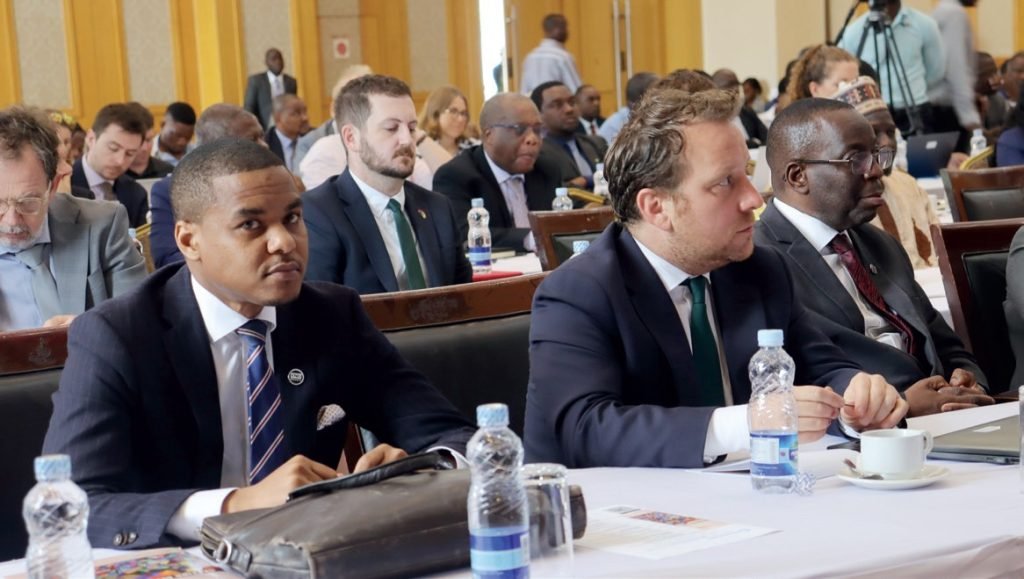
The World Bank says Malawi has shifted from relative macroeconomic stability to systemic distress and the centre of that shift is a prolonged collapse in export performance. In the latest Malawi Economic Monitor (MEM) titled ‘Getting reforms right: Reversing Malawi’s export decline’ unveiled in Lilongwe yesterday, World Bank country economist Anwar Mussa noted that beneath the country’s fiscal and monetary pressures like a deepar structural weakness: a decade-long contraction in exports. He said that real gross domestic product (GDP) growth was recorded at 1.9 percent in 2025, marginally above 1.7 percent in 2024, but still below the country’s 2.6 percent population growth rate.
Said Mussa: “For four consecutive years, per capita incomes have fallen. Recurrent weather shocks, acute foreign exchange shortages, fuel disruptions and chronic power constraints continue to suppress output.” The report indicates that after peaking in 2014, exports as a share of GDP have steadily declined over the years. Tobacco accounted for 61 percent of exports in 2024, underscoring huge concentration risk, according to the report, indicatnig that the number of product categories exported has also fallen from 1 070 in 2010 to 634 in 2024.
It further said Malawi has only 3.2 exporters per 100 000 people, compared to an African average of 28 and only 20 percent of new exporters survive into their second year. In his remarks, World Bank senior economist Jakob Engel said the Malawi must break a “vicious cycle” in which structural weaknesses, macro instability and restrictive trade policies reinforce one another. “The structural problems are self-reinforcing,” he said, arguing that exchange rate distortions and trade barriers have compounded competitiveness challenges.
[paywall]
Engel cited the dual exchange rate regime and the mandatory surrender of 25 percent of export proceeds as immediate constraints. “The current system, with a large and volatile spread between the parallel and official rate and the 25 percent surrender requirement, impede exports and subsidises imports for those with access to the official rate and encourages informality,” said Engel. Minister of Finance, Economic Planning and Decentralisation Joseph Mwanamvekha, speaking during the launch of the report, said reforms must be coherent and sustained.
“With the right reforms, properly sequenced and sustained, Malawi can reverse export decline, strengthen resilience, restore confidence and build a competitive and diversified economy,” he said. Deputy Minister of Industrialisation, Business, Trade and Tourism Edgar Tembo framed exports as central to stability.
[/paywall]
All Zim News – Bringing you the latest news and updates.
