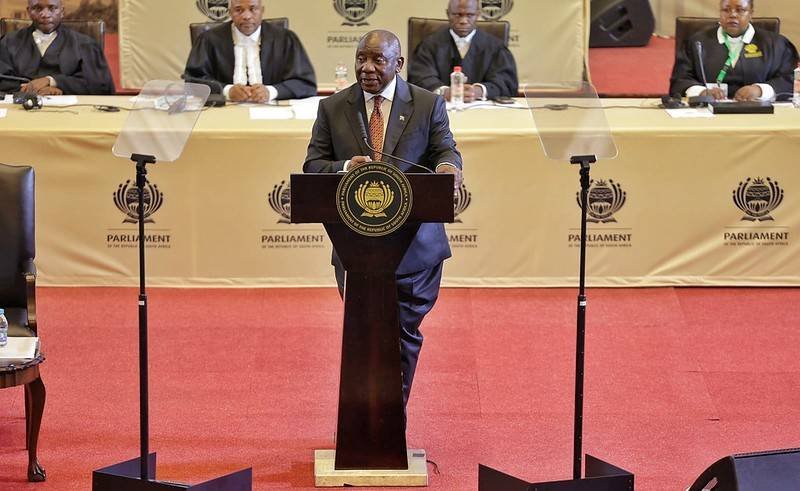
The recently heldState of the Nation Address(Sona) continued to be one of President Cyril Ramaphosa’s flagship PR initiatives, balancing self-praise with accountability. The Sona is an interesting event because, whereas it seems like a generic tick-box exercise to most people, it is actually a powerful symbol of what the presidency considers of national importance and thus needs to be communicated to 60 million people. In other words, whatever Ramaphosa chooses to mention (or not mention) in his roughly half-hour monologue should serve as the definitive report on what the previous 12 months were for South Africa; however, this means South Africans have to wait a year to know what the government has been working on.
As one can imagine, the process of organising an event of this magnitude is no simple task. What is not mentioned in the R7 million price tag is the cost of coordinating the many speechwriters, policy advisers and senior officials required to write the speech itself. To reflect the state of the nation as accurately as possible, one would imagine that the government would consult as diverse a group of people as possible.
While this cannot be argued, the information used to compile the speech is not democratised. Ramaphosa’s address highlighted two possible scenarios plaguing government communications: essential updates and events within government are confined to the president’s office while ministerial and provincial offices are left in the dark, or government communications remain watertight, keeping important information that affects the public to itself. The latter possibility is the most concerning, as citizens may be left unaware of essential matters that affect their daily lives.
Read Full Article on Mail & Guardian
[paywall]
Existing government communication methods on platforms such as Facebook or X (previously Twitter) are failing critically in their missions. Consider, for instance, the announcement that state-owned companies (SOCs) are being “recovered from the effects of state capture”, leading to “improved investor confidence”. This statement raises the question of which SOCs are being referred to, and why no one other than the president shares this view.
Why is the public not being made fully aware of these “recoveries” meant to ease pressure on the increasingly overburdened average person? According to anX reportby Decode, a PR and communications agency based in Johannesburg, the government does not engage in true dialogue, posting event photos and internal updates but rarely listening to exactly what followers want to know. Take apart, for instance, the term “rising investor confidence”.
Which government players are responsible for this, and how have they communicated it to the public before the speech? The Industrial Development Corporation (IDC), responsible for fostering the economic growth of South Africa’s key sectors, had nothing to say on X about any role it played in “improving” investor confidence; in fact, it continued posting about its CEO’s attendance at the recent Mining Indaba. So, is it safe to say that the IDC and its constituents are not responsible for the “improving” economy?
[/paywall]
All Zim News – Bringing you the latest news and updates.
