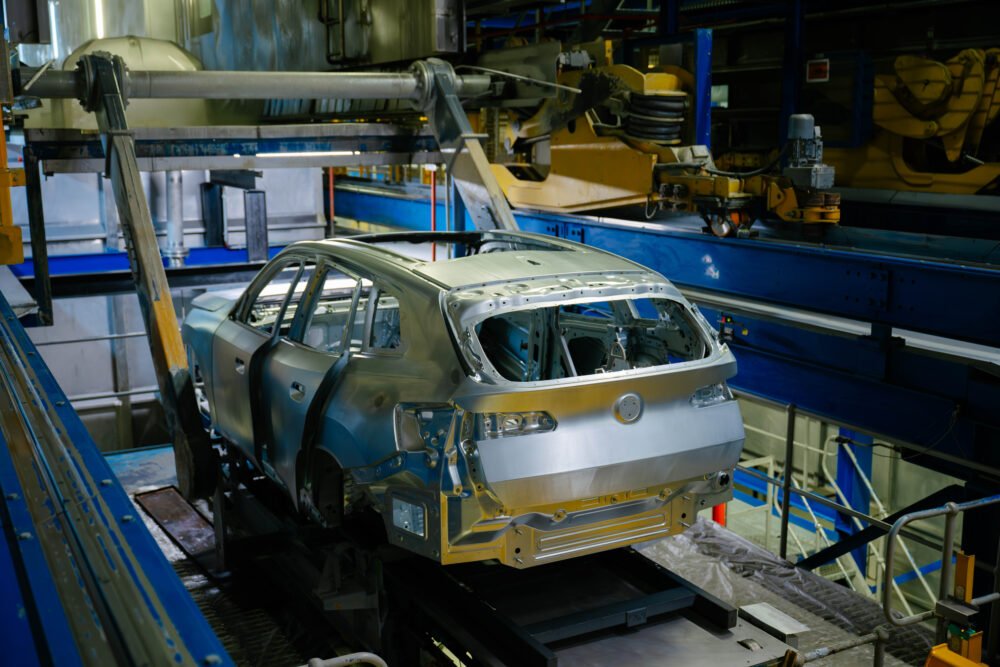
Can South Africa leverage its mineral wealth and manufacturing expertise to secure a meaningful position in Africa’s mobility revolution? The answer requires an honest assessment of our strengths, our limitations and the strategic role the country can realistically play. South Africa boasts the most advanced automotive industry in Africa alongside Morocco, with sophisticated road infrastructure, strong technical capabilities and supply chain depth, and an established manufacturing base.
South Africa has a very mature and evolved automotive ecosystem, including special economic zones (SEZs) designed to boost automotive manufacturing and export capabilities, Tier 1 and Tier 2 manufacturers, training facilities and the Automotive Production and Development Programme (APDP). The country has the most mature original equipment manufacturer (OEM) presence in Africa, supported by deep Tier 1 and 2 supplier networks. The infrastructure supporting this ecosystem is impressive.
Available SEZs include Coega in the Eastern Cape, Dube TradePort in KwaZulu-Natal, Atlantis as an emerging player in the Western Cape, and Tshwane in Gauteng, all with a strong automotive focus and existing OEM presence. The workforce is highly skilled, supported by excellent training infrastructure, including automotive Sector Education and Training Authorities (SETAs) and technical colleges. South Africa is world-class in terms of manufacturing capability, engineering and access to components for motor vehicle manufacturing.
Read Full Article on Mail & Guardian
[paywall]
What sets South Africa apart is that a large part of the population drives four-wheelers rather than two-wheelers, which supports greater economies of scale. This is where South Africa’s manufacturing excellence has historically thrived. South Africa has a mature automotive sector, including OEMs that export globally, supported by trade agreements such as the SADC European Partnership Agreement (EPA), the Southern African Customs Union and Mozambique–United Kingdom Economic Partnership Agreement (SACUM–UK EPA) and traditionally the African Growth and Opportunity Act (Agoa).
However, the continental picture is changing, especially with Morocco’s increasing competitive advantage in automotive manufacturing. Morocco also benefits from both proximity and a free trade agreement with the European Union. The rise of two and three-wheelers across the continent has been significant, with West Africa arguably the biggest consumer of these vehicles, which are better able to navigate inadequate road infrastructure in the region.
Recognising this demand, players from India and China are increasingly moving into this market. There are many startups, mostly in East Africa, creating electric two and three-wheelers to offset the environmental impact of motorcycles and reduce costs, with increased innovation from fintech startups offering financing and insurance for taxi drivers, spurring local job creation. The market data reveals South Africa’s position as a relatively small player in the continental two and three-wheeler market, with West and East Africa representing most of the demand.
South Africa has a limited motorcycle culture and a small domestic market relative to East and West Africa. However, mobility is changing with delivery bikes for last-mile delivery, though not at the scale seen in West Africa. Furthermore, South Africa is also a high-risk country for motorcycles.
Yet opportunities exist in specific niches. South Africa has a role to play in the last-mile delivery space using motorcycles, and we should start seeing more assembly of two and three-wheelers locally. However, economies of scale continue to favour four-wheelers.
[/paywall]
All Zim News – Bringing you the latest news and updates.
