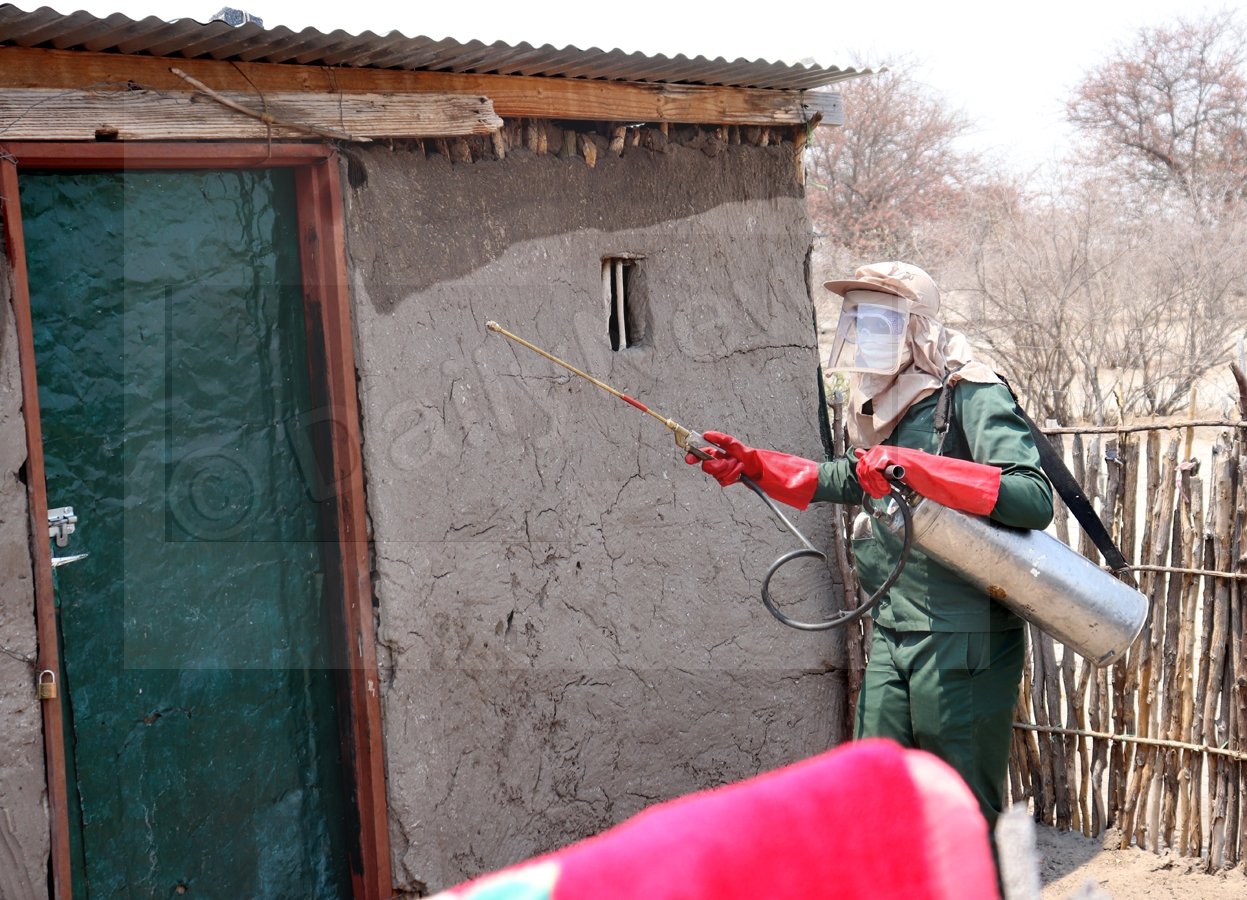
Thirty-eight (38) confirmed cases of Malaria were registered in the North West District between November 2025 and January 2026, with one casualty recorded. According to North West District Council (NWDC) Deputy Council Secretary for Primary Health, Dr Sandra Maripe- Ebutswe, the rising number of Malaria cases signals a pressing public health concern, and underscores seriousness of the outbreak in the district. He said nine villages in the district have already been affected, with Botshabelo and Moeti wards in Maun among the hardest hit areas during the current peak.
Authorities in the NWD have expressed growing concern about the nearly 1,000 households that have refused indoor spraying meant to control the disease, despite the seriousness of the situation. Dr Maripe- Ebutswe pointed out that 964 residents refused indoor residual spraying (IRS) – a preventative method considered one of the most effective tools in controlling Malaria transmission – between October and December. “People are refusing to open up their houses for the IRS and it is very concerning as cases continue to rise especially during this rainy season,” she said.
She also said health teams encountered operational setbacks, with 2,590 residents absent when spraying teams arrived and 1,013 houses found locked and inaccessible, significantly slowing containment efforts. IRS involves spraying the inside walls of homes with insecticide to kill mosquitoes that transmit Malaria, effectively reducing infection rates within households and across communities. Dr Maripe- Ebutswe stressed that Malaria control depended on collective responsibility, warning that refusal to allow spraying weakened community-wide protection “Spraying is a protective measure for families and neighbours alike, and without cooperation, the disease continues to circulate,” she said.
Read Full Article on Daily News Botswana
[paywall]
Rural areas remain heavily targeted for spraying due to their vulnerability to mosquito breeding, particularly during the rainy season when stagnant water increases transmission risks. The Okavango Delta region, characterised by wetlands which naturally attracts mosquito populations, remains another area of concern. Around 2,031 mosquito nets have been distributed to camps in the region to reduce exposure.
[/paywall]
All Zim News – Bringing you the latest news and updates.
