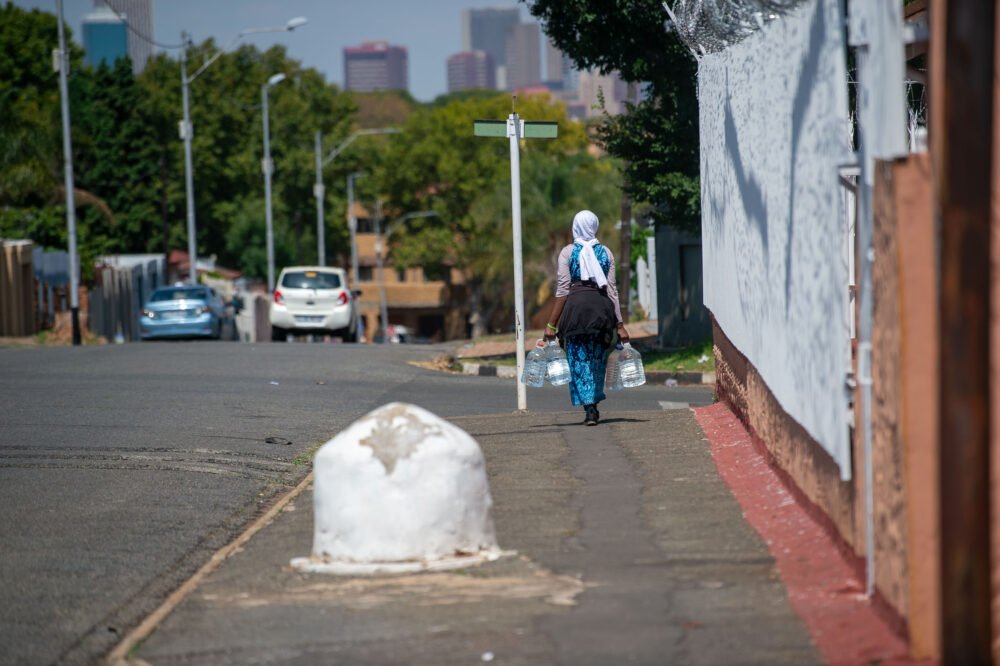
Along with crime, water has become the single most important issue for many South Africans — fromlarge cities like Johannesburgto smaller towns such asKnysnaand rural areas including Giyani, President Cyril Ramaphosa said in hisState of the Nation addresson Thursday. “We have all seen the pain that our people have been expressing through demonstrations in various parts of Gauteng,” Ramaphosa said. “These protests have been fuelled by the frustrations that our people are feeling over inadequate, unreliable access to basic services such as water.” He said he had instructed the minister of water and sanitation and her deputy, as well as the minister of cooperative governance and traditional affairs, to intervene directly in the crisis.
“I have directed the minister of water and sanitation and her deputy, as well as the minister of cooperative governance, to attend to the water shortage problem and engage with our communities,” he said, to applause. “As we speak, they are in Gauteng, engaging with our people, explaining to them precisely how the government intends to immediately deal with the challenges that our people are experiencing. They inform me that the pipes that have been damaged are being repaired and that reservoirs are filling up again.” More applause erupted in the chamber.
Ramaphosa said the deepening water crisis stemmed largely from poor planning and years of inadequate maintenance of water systems by many of the country’s municipalities. “The main cause of the problems is now the reason why we are having empty taps,” he said. He stressed that “there is no silver bullet to address this challenge”, which has its roots in systemic failures and “many years of neglecting infrastructure”.
Read Full Article on Mail & Guardian
[paywall]
To ensure water security over the long term, Ramaphosa said the government was building new dams and upgrading infrastructure. It had committed R156 billion in public funding for water and sanitation infrastructure over the next three years. He said construction of Phase 2 of the Lesotho Highlands Water Project and other large-scale projects were advancing and that the government was in the final stages of establishing a National Water Resource Infrastructure Agency to effectively manage the country’s water infrastructure and mobilise funding.
“However, the real challenge lies not in the availability of water but in getting water to people’s taps,” Ramaphosa said. The Water Services Amendment Bill, he said, would enable the government to hold water service providers accountable for their performance and where necessary, withdraw their licences. “If they don’t perform, we must be able to withdraw their licence if they do not deliver,” he said.
“If a municipality is not willing or able to provide a service to its residents, then it must be done by another structure that can do so. These reforms will address the root causes of the water crisis.”
[/paywall]
All Zim News – Bringing you the latest news and updates.
