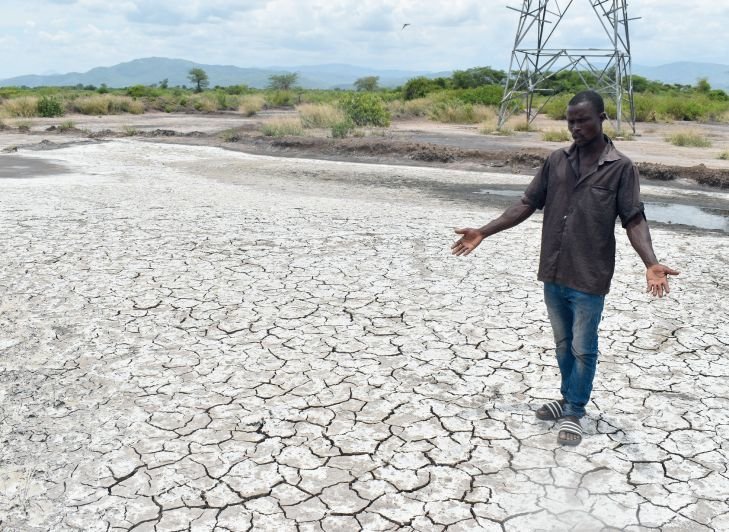

From camera-ready escarpments on the Blantyre-Chikwawa Road, PressCane Limited’s ethanol distillery in the Shire Valley pops into view like a smoke-free miniature placed on the west bank of Malawi’s largest river.
The distiller’s towering chimneys stopped producing smoke on January 26 when the Malawi Environmental Protection Authority (Mepa) shut down the coal-fired factory for polluting land, air, water and communities near its acidic wastewater ponds at Dyeratu in Chikwawa District.
Surrounding communities accuse the ethanol producer of chronic spills that have polluted the floodplain for nearly two decades as regulatory authorities slept on the job.
Three weeks ago, heavy torrents forced the swelling industrial wastewater to burst the waste ponds, flooding nearby homes, waterways, grasslands, farmlands and streams.
However, the shutdown ordered by environmental protectors has not stopped foul fumes seeping from wastewater waiting to be turned into fertiliser by a $10 million factory that has missed its rollout dates since 2023.
When one gets closer to Dyeratu Market, where travellers used to grab a bite on the way to Nsanje District at the southern tip, the stench overwhelms humanity.
The outpouring stink brings into question the ethical and sustainability ratings of PressCane, a joint venture by the State-dominated Press Corporation and privately-owned Cane Products Limited.
The firm employs about 100 workers who ferment molasses from Illovo Sugar (Malawi) plc’s sugar mills at Nchalo, 30km south of Dyeratu, to produce ethanol mostly used in petrol mixture, liquor pr

oduction, school labs and other industrial processes.
Its sticky wastewater, a biochemical scientist at the Malawi University of Business and Applied Sciences (Mubas) described as highly acidic and toxic, exposes a graver environmental crisis that often goes unreported, unpunished, unmitigated and unaccounted for.
During a visit on Saturday, The Nation saw how a 1.5-metre high fence erected to keep the toxic waste in check has fallen short with the brownish liquid waste, called vinasse or stillage, freely seeping into nearby villages via porous soils, flooding and evaporation.
In an interview yesterday, Mubas Associate Professor Chikumbutso Kaonga said: “The waste product is highly acidic and rich in organic matter, which can kill any plants and living things in its way.”
The stated side-effects stirred a backlash in 2010 when PressCane was dumping the sticky waste on Dyeratu’s earth roads, only for rains to wash them into fields where crops kept wilting.
For over 15 years, fear ripples beyond the crowded community where recent overflows choked waterways and scorched crops, shrubs, trees in their way.
The bubbling pools and trail of destruction are vivid in Patrick Mpinganjira’s homestead where the spills scorched 28 trees, including hedges and two seven-year-old neem trees that stood green come rain or sunshine. The pair wilted and shed its leaves within hours, says the 58-year-old father of seven.
“The trees shade us from the valley’s sweltering sunshine and refresh the air we breathe, but they died within hours after PressCane’s wastewater flooded my home around 2am. By 4pm, the seven-year-old neem and matondo trees had wilted and later shed their leaves. Sadly, even the trees we plant can’t survive,” he laments.
All Zim News – Bringing you the latest news and updates.
