Malawi’s health sector faces uncertainty following the United States of America’s (USA) decision to withdraw from the World Health Organisation (WHO), a move government says has left several critical interventions in limbo. On January 2 2026, the USA announced it was ending its membership of WHO. Until then, the USA had been the organisation’s largest donor, contributing about $1.284 billion during the 2022/23 biennium to support emergency responses and control the spread of diseases across borders.
WHO later acknowledged the USA’s major role in global health gains, including the eradication of smallpox and progress in combating polio, HIV and Aids, Ebola, tuberculosis, malaria, influenza and other diseases. In Malawi, WHO is implementing a $144 million (about K249 billion) Country Cooperation Strategy (CCS) covering the period 2024 to 2028. The strategy guides WHO support to the country’s health system over five years.
In a written response yesterday, the Ministry of Health (MoH) said the loss of US partnership would constrain WHO’s capacity to provide timely technical assistance, policy guidance and normative standards. MoH spokesperson Adrian Chikumbe said this could slow progress in CCS priority areas such as Universal Health Coverage, health financing, quality of care, patient safety and disease surveillance, increasing reliance on national and regional expertise. He noted that reduced WHO resources may also weaken emergency preparedness, surveillance and response, particularly for climate-sensitive and epidemic-prone diseases, forcing Malawi to manage outbreaks and emergencies with limited external coordination.
[paywall]
“WHO plays a central role in partner coordination. Reduced convening power will increase the coordination burden on the ministry to align partners to national priorities and prevent fragmentation,” said Chikumbe, adding that this would require stronger government-led mechanisms under Health Sector Strategic Plan (HSSP) III. WHO has been supporting Malawi in implementing HSSP II and III and the Health Financing Strategy (2023–2030).
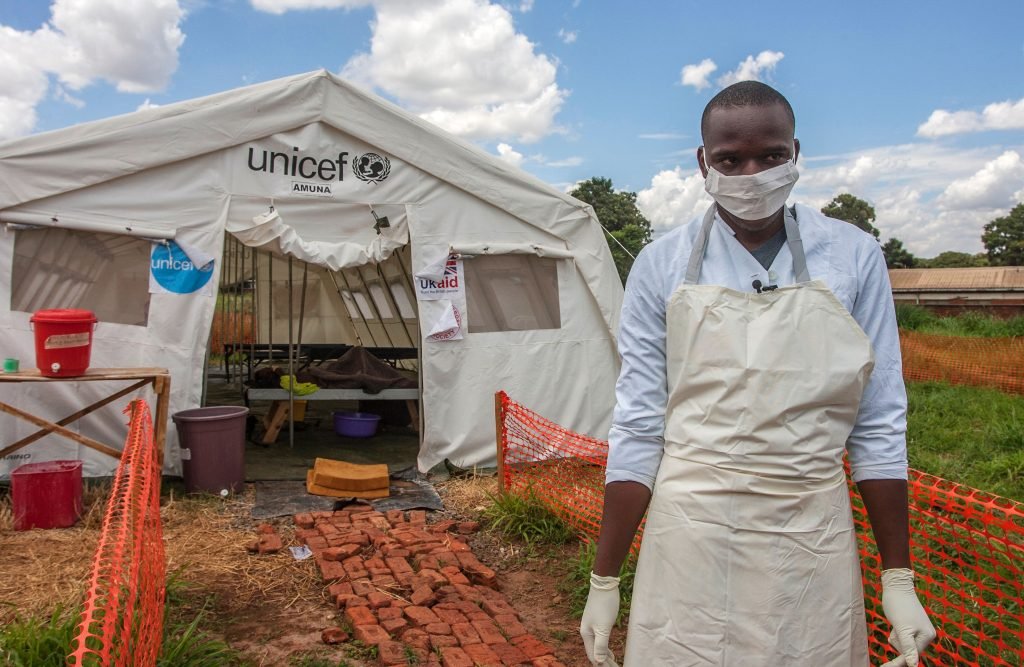
However, multiple emergencies—including Covid-19, a wild poliovirus outbreak, cyclones Idai, Gombe and Freddy, Tropical Storm Anna and a prolonged cholera outbreak—have strained service delivery, prompting development of the CCS. Chikumbe said programmes likely to be most affected include HIV and Aids services, tuberculosis control, maternal, newborn and child health, immunisation, and disease surveillance and emergency response for outbreaks such as cholera and mpox. To mitigate the funding gap, he said government is prioritising essential services, strengthening domestic resource mobilisation and improving budget execution for health, while reducing duplication and fragmentation in the sector.
In an email response, WHO Malawi representative Charles Njuguna said government was best placed to comment on the implications of the US withdrawal but reaffirmed WHO’s commitment to supporting Malawi’s health system. The CCS budget allocates $50 million to strengthening health systems, $70 million to emergency preparedness and response, $14 million to addressing social and environmental determinants of health, and $10 million to health information systems. Health rights activists Maziko Matemba and George Jobe expressed hope that dialogue between the USA and WHO would resume, warning that the decision could weaken global and national health responses.
[/paywall]
All Zim News – Bringing you the latest news and updates.
