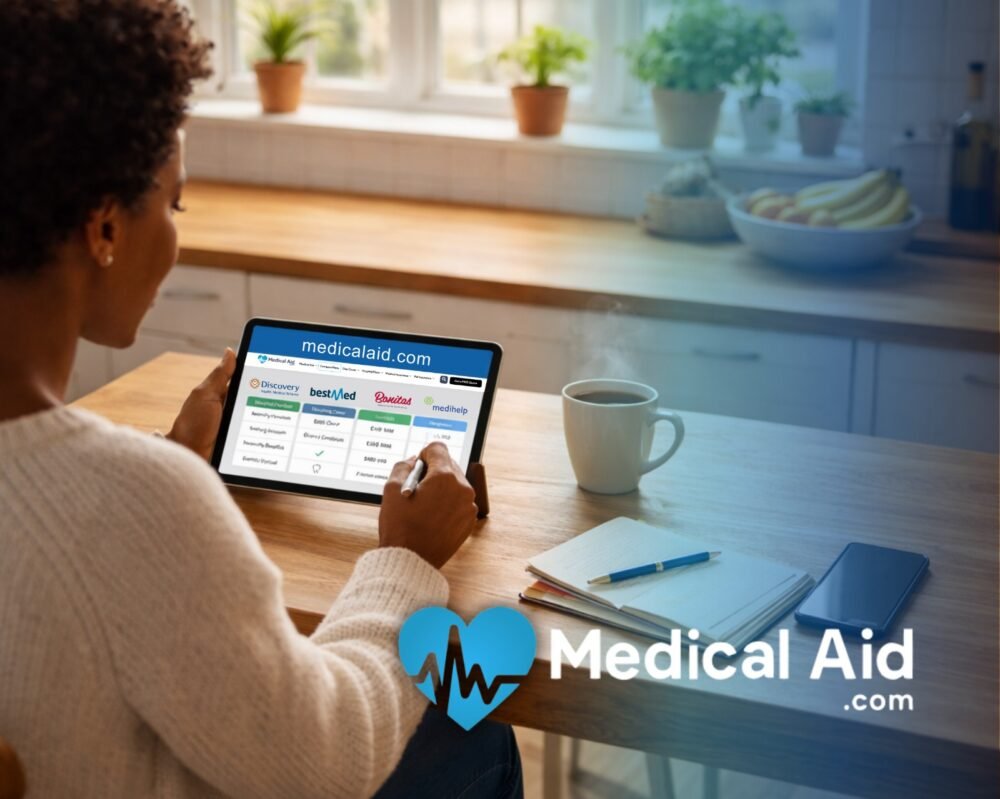
Having medical aid cover in South Africa can mean important protection and access in the case of illness or injury. But understanding the different options and what they cost can be tricky and overwhelming. Co-founder of comparison websiteMedicalaid.com, Adriaan Schoeman, explains how to do it well.
Question:Why is choosing a medical aid option so difficult for South Africans? Answer:Firstly, there are a lot of open schemes to choose from, like Discovery Health, BestMed, and Bonitas, as well as less-known medical aids, like Genesis and Sizwe Hosmed. There are also closed schemes for particular jobs or people.
So, the South African public is spoiled for choice! Another problem South Africans have is in understanding terminology. That might include abbreviations, like PMB for Prescribed Minimum Benefits.
Read Full Article on Mail & Guardian
[paywall]
Different schemes may use different words, like standard or comprehensive, for a similar offering. It’s also very difficult to compare benefits with benefits like apples with apples. Another typical pitfall is understanding when you’ll be liable for a co-payment, even if something says you have 100% cover.
There’s a lot of fine print in terms of what is covered when and where. Q: Given all of that, how should the average South African, who might be overwhelmed by information, really look out for when choosing their cover? A: I think firstly, you need to do a lifestyle audit and compare your risk.
If you’re young and fit, you can get away with an entry-level hospital plan just to be covered if something major happens. As you grow older and may have a family, you need to consider expanding to cover your partner and children. As you grow older, you need to move up to a higher, more comprehensive plan, as you may get more ill and need more care.
Q: The pricing for medical aid schemes can be wildly different from customer to customer. What goes into this thinking, and what should people look out for? A: Your health profile does affect the price of what you pay, such as previous cancers and your age.
There are also certain plans that base the core fee structure on your income. Beyond this, an important thing to be aware of is the late joiner fee. If you didn’t join a medical aid before the age of around 35 or 36, you start to pay a late joining fee that continues indefinitely.
Your cost may also be influenced by whether specialists are paid out at a 200% or 300% rate, for instance. Some plans have an attached savings account where up to 25% of your monthly premium is set aside, so that you can use that for your day-to-day medical expenses. That raises the premium.
Also, all schemes must cover the prescribed minimum chronic conditions, but some plans cover extra chronic conditions, which makes those plans more expensive. You’ve got a choice between network hospitals and getting to choose any hospital. The plans where you can only use a designated provider are a little cheaper.
Lastly, there are some hidden costs people need to take a look at. This includes co-payments, the list of approved medicines and the self-payment gap.
[/paywall]
