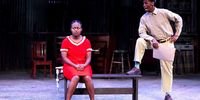
The iconic play Marabi is back on stage, celebrating South Africa’s unique cultural history and highlighting the horrors of apartheid-era forced removals. The Market Theatre has launched its 50th-anniversary celebrations with a vibrant tribute to Johannesburg’s cultural soul: a revival of the iconic musical Marabi. For director Arthur Molepo, the production is a homecoming.
Having starred in the original 1982 Junction Avenue Theatre production, Molepo now returns to lead a new generation through the story he helped shape decades ago. The action is punctuated by original songs set in the style of marabi music, a genre that symbolises the disruption at the heart of the play. Marabi infuses American jazz, ragtime and blues with traditional African styles.
It was born out of black urbanisation and the migrant labour system and dominated the 1930s Johannesburg cultural scene. Set in the yards of Doornfontein in the 1930s, Marabi follows a family of black first-generation migrants to the city as they grapple with tradition, changing technologies and the looming threat of forced removals. Mabongo (played by Sello Sebotsane) is the family patriarch who rejects all signs of modernity — marabi music included — perhaps out of a sense of insecurity at his own nontraditional lifestyle.
Read Full Article on Daily Maverick
[paywall]
His wife, Ginger George (Katleho Moloi), brewsskokiaan(illicit homebrew) for extra cash, and his naive daughter, schoolgirl Martha (Gabisile Tshabalala), falls for a marabi player who sells her dreams of one day performing on stage. The result is a lively play that unpacks themes of belonging, disruption, teen pregnancy and forced removals, with moments of humour in between. Although the play focuses on historical events, its themes are still relevant to 2026 audiences, such as its exploration of live performers being replaced by new, cheaper technologies like gramophones, which is particularly prescient in the era of artists being replaced by AI.
Molepo told Daily Maverick that the play is a tribute to those who lived through forced removals, as well as the original 1982 cast and crew, which included late South African acting legends like Fats Dibeko, Siphiwe Khumalo and Ramolao Makhene. He decided to revisit the original script and songs that he wrote for the 1982 production to honour them. “I lost quite a few people that I used to like, that we made a play with from long ago, and they’re gone.
Today I’m still surviving, but I just thought to myself, in their memory, I wanted to revisit Marabi,” he said. The result is a cross-generational cast of actors, from Alister Dube, who performed in the 1995 run and plays Mr Makhalima in this rendition, to Gabisile Tshabalala, who gives a standout performance as Martha, a rebellious and naive schoolgirl with a talent for singing. Included is Molepo’s son, Mpho Molepo, who plays Ntebejane, a character based on the real-life father of marabi music.
Dube, whose relationship with the Market Theatre dates back to the late 1980s, told Daily Maverick that the revival would educate audiences about South Africa’s past. “You know, the reason we tell this history is that we want people to see how much we have improved and how much things have gone. So coming to see this play, people will be able to tell how much we have improved as a people, as a country, you know, and what also still has to be done.” For Molepo, the choice of the Market Theatre as a venue is deeply personal.
He had a relationship with co-founder Barney Simon and first encountered the space when it was still just a market. “It was just a structure, the market, from the olden days, it was that structure. Every day we were here, but as the time progressed, the Market Theatre began to stand up,” he explained.
[/paywall]
