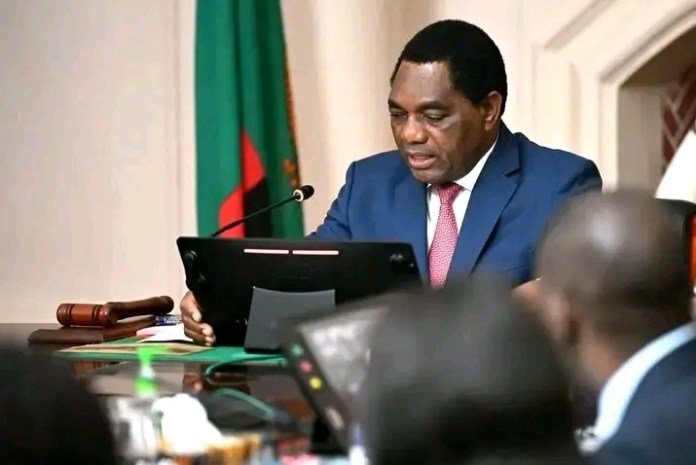
🇿🇲 REFLECTION | Hichilema’s Presidency So Far: Does He Deserve Re-election?Four years into office, the presidency of Hakainde Hichilema is increasingly judged in two parallel conversations. One argues that ordinary people are still struggling and therefore “nothing has changed.” The other points to structural reforms, social investments, and state rebuilding that were absent for nearly a decade. Both views exist.
This reflection focuses on what can be factually established. Debt Stabilisation and Macroeconomic RecoveryThough often dismissed as “elite economics,” the debt restructuring process, IMF programme completion, and reserve accumulation stabilised the state itself. Foreign reserves rose from crisis levels to multi-billion-dollar buffers.
This enabled currency stability, restored fiscal credibility, and unlocked concessional financing. Without this reset, none of the social programmes above would be sustainable. Social Protection and Direct Household SupportThe expansion of Social Cash Transfer, Cash-for-Work, NAPSA partial withdrawals, and minimum wage adjustments formed a layered safety net.
Read Full Article on Zambian Observer
[paywall]
These interventions did not eliminate poverty, but they reduced shock vulnerability during droughts, inflation spikes, and unemployment cycles. The approach marked a shift from patronage to institutionalised social protection. Agriculture and Food Security ReformFrom FISP reform to SAF loans, resettlement schemes for youths, mechanisation support, and input rationalisation, agriculture was repositioned as both a livelihood and a macro stabiliser.
The result was a bumper harvest, reduced import pressure, and stronger rural incomes. Food security became a policy anchor rather than a seasonal gamble. Energy, Infrastructure, and ConnectivityProjects such as the Lusaka–Ndola Dual Carriageway, Chisamba Solar Plant, rural electrification funding, power interconnections with Tanzania, and solar duty removal addressed both supply and transition.
Energy policy shifted toward resilience and diversification, critical in a climate-exposed economy. Governance, Justice, and Civil ReformThe abolition of the death penalty, fast-track GBV courts, expanded legal aid, DNA testing capacity, and reforms to cyber laws signalled institutional recalibration. These moves did not end abuse or injustice, but they reset the legal direction of the state toward rights-based governance.
Youth, Skills, and Future Workforce PreparationSkills training across all 156 constituencies, youth empowerment schemes, motorbike financing, ZNS voluntary reintroduction, and green economy recruitment addressed long-term employability rather than short-term handouts. The strategy focused on absorption capacity, not just mobilisation rhetoric. So, Does He Deserve Re-election?The evidence suggests a presidency focused on repairing systems before harvesting applause.
The benefits are uneven, the cost of living remains high, and communication gaps persist. But structurally, the state today is more solvent, more predictable, and more socially engaged than it was in 2021. This record does not argue that everything has worked.
It argues that something substantial has been built. The choice now stands before the electorate.Next on The Reflection: Populists, pragmatists, and dark horses redefining Zambia’s 2026 battle.© The People’s Brief | Ollus R.
[/paywall]
