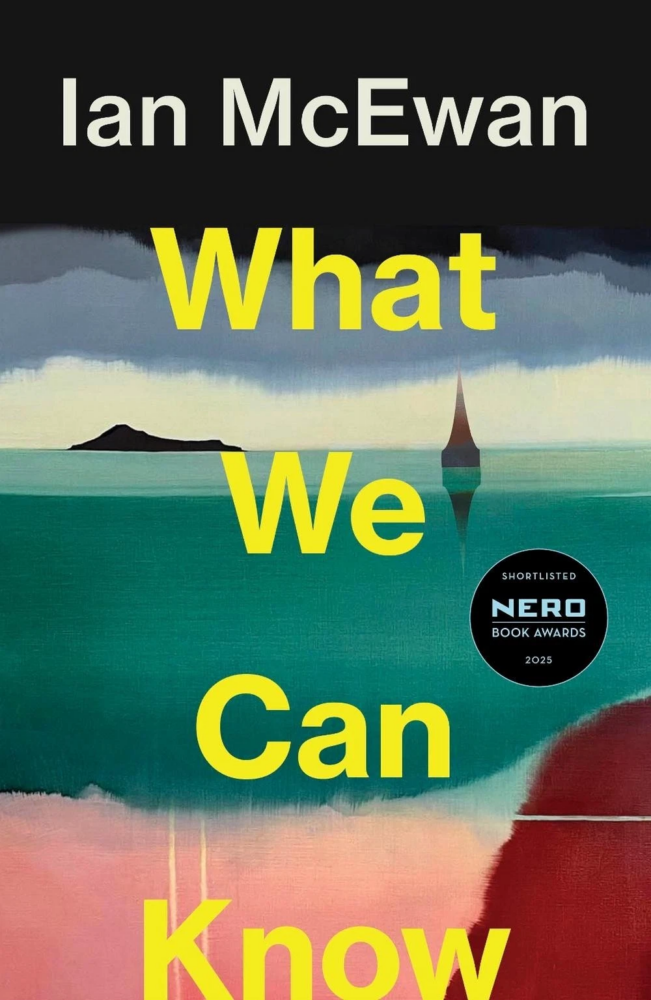
Ian McEwan’s latest novel is a sophisticated dystopian work of climate fiction.What We Can Knowis a philosophical reflection on the future of our species and could even be read as a treatise on our humanity. It seems McEwan is preoccupied with the question of what will happen next? His main concern is the loss of humanity, history, wisdom and knowledge.
When something is lost, what is the possibility of recovering that knowledge? What happens when we humans lose the knowledge of the past and all the gains of civilisation. What sort of crises might we face in the near future?
The novel explores all these questions. That’s why it is set 100 years in the future, in 2119. We follow academic Thomas Metcalfe’s quest for a famous poem written by Francis Bundy,A Corona for Vivien.
Read Full Article on Mail & Guardian
[paywall]
The poem was never published, only being recited at a 2014 dinner party and has since been lost. In this regard, it evokes AS Byatt’sPossessions. Metcalfe and his wife become deeply absorbed in the search for the lost poem, in understanding the people behind it, the relationships that shaped it and the human values it reflects.
The story of Francis Bundy and his wife Vivien, is revealed indirectly through Vivien’s journal and fragments of Francis’s poetry. Through these sources, readers gain insight into their marriage. Vivien’s observations, Francis’ personality and the dynamics of their household are revealed even though the story takes place more than a century before Metcalfe’s time.
Francis is portrayed vividly as “vain, opinionated, self-important, careless of others, ungenerous, mean-spirited, dependent and entitled; and a great poet,” highlighting the tension between artistic brilliance and moral flaw. Although Francis and Vivien are long gone in Metcalfe’s time, the past continues to shape the present. Vivien’s journal presents her as more passive, her voice often overshadowed by the dominating presence of the celebrated poet. She comes across as someone almost serving the demands of a genius, while the narrator reflects on the broader implications of engaging with history: “The past would have to be sensitised,” meaning it must be interpreted carefully because it carries both obstacles and aspirations that continue to affect humanity.
[/paywall]
