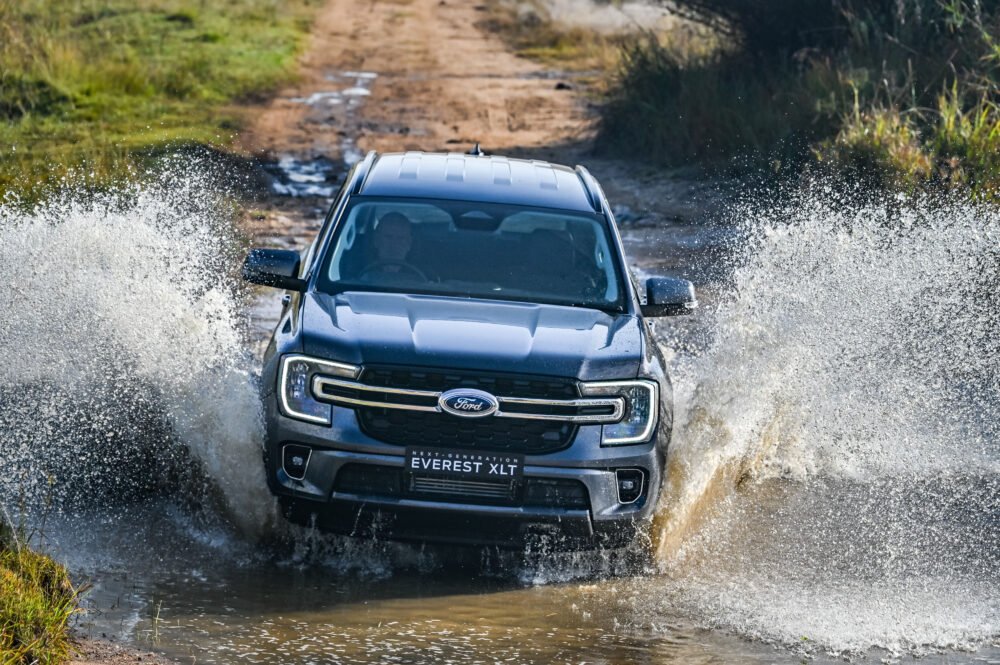
When I reviewed theFord Everest Wildtraklast year, I labelled it “that handsome friend that can do everything”. It was impressive. It was bold, athletic, spacious, could go off-road and rocked a great presence on the road.
When I received the Everest XLT, which is the entry-level model of the Everest Range, I was curious to see how much of a difference I would feel, because there is a significant price difference. The main difference is that the Everest XLT is equipped with a 2 litre bi-turbo diesel engine and the Wildtrak has a 3 litre V6 turbodiesel engine, which meant that there would obviously be a drop-off in power. Would it be enough to affect the vehicle negatively?
The Everest XLT manages to easily eat up the road with no issues. The drive is smooth and I had no feeling of bulkiness despite the size of the vehicle. While I had the vehicle on test, Ford said in a statement that the Everest XLT would be replaced by the Everest Active in 2026.
Read Full Article on Mail & Guardian
[paywall]
The Everest Active is going to lose the 2 litre bi-turbo and have a less powerful 2 litre single-turbo diesel engine instead. It did make me wonder why Ford would replace an amazing entry-level vehicle in the range. Then again, the Everest XLT 4×4 variant starts at more than R1 million and Ford probably needs to make the vehicle slightly more affordable.
However, I wonder if a single turbo with 125kW of power will affect the vehicle. But back to the Everest XLT. I felt sad knowing this was the last of it.
It is an entry-level vehicle that looks, drives and feels like much more than that. It is a seven-seater with a lot of comfort and features, as well as a 12-inch infotainment system that you will find in all the models above it.
[/paywall]
