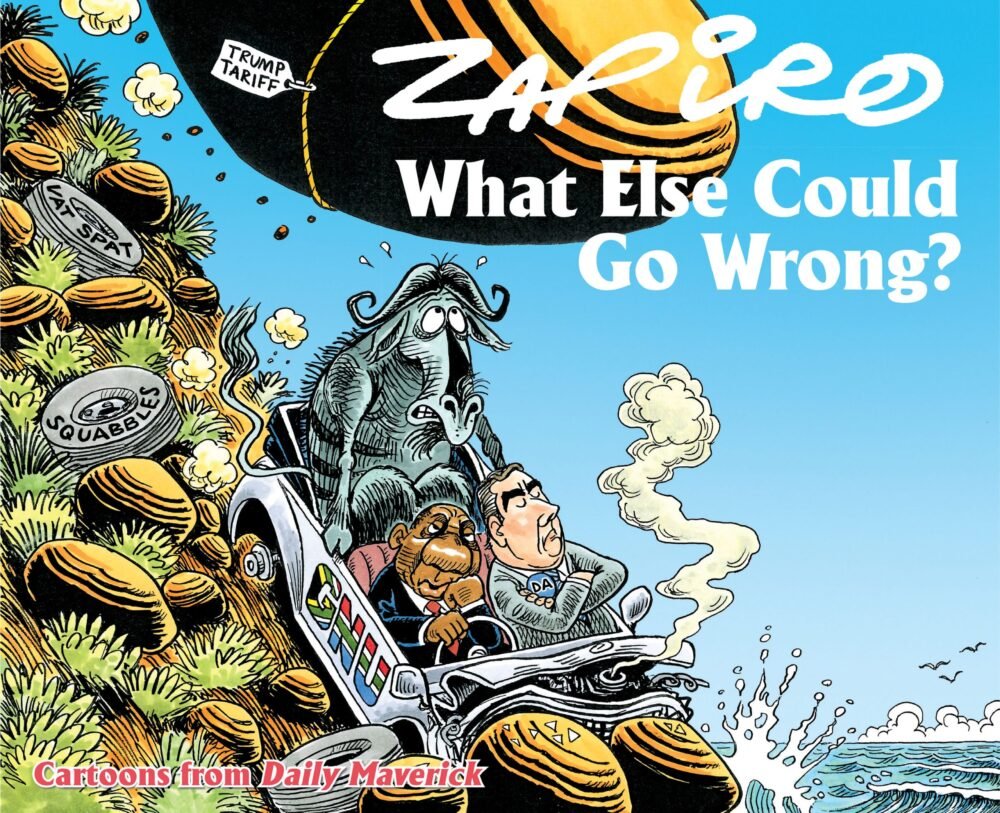
As corruption, arrogance and exclusion threaten hard-won freedoms, a new crop of books — on universities, satire, music — reminds us that democracy is not inherited but defended through memory and dissent. Institutional memory. Institutional integrity.
Institutional trust. These are the words that come to mind when I reflect on a clutch of significant books that landed on my desk as 2025 drew to a close. The festive lull arrives each year with its own quiet conspiracy: permission to pause.
Beyond the ritual of closure lies a gentle invitation to withdraw, to read not for quotes or deadlines but for meaning. It is a rare right royal retreat from alarm clocks and the screech of breaking news, interrupted only by the hadeda swooping over the rolling green hills surrounding GreenGold Lilliesleaf House. Journalism thrives on immediacy — deadlines, breaking news, the tyranny of the now.
Read Full Article on Mail & Guardian
[paywall]
Yet the so-called “silly season” offered something precious: time to read deeply. Books wait patiently. They do not shout; they invite.
The books under review speak to epic individual and institutional contributions that helped reshape South Africa’s political, cultural and intellectual landscape — from the censorship-driven years of apartheid to the contested freedoms of democracy. Closest to home isUniversity of Durban-Westville 1961–2003: Undoing Apartheid, Building a Non-Racial Culture(UKZN Press), edited by Saleem Badat and Goolam Vahed. Meticulously researched across 510 pages, the long-gestating work chronicles 42 turbulent years of one of South Africa’s most politically charged campuses.
UD-W, once described as the “site of struggle”, was born out of apartheid’s segregationist education system. Relocated from Salisbury Island to Westville in 1971 to serve Indian students, it was initially presented as a symbol of “separate progress”. Instead, it became a crucible of resistance.
Figures such as Saths Cooper, who was later the last vice-chancellor before the merger that created UKZN, and activists like Strini Moodley linked campus struggles to Black Consciousness, repurposing segregation into dissent. The book also records the critical transition from Afrikaner leadership to progressive academic stewardship in the 1990s, including the tenure of vice-chancellor Professor Jairam Reddy. UD-W’s legacy endures as a paradox: an institution created to divide, remembered for courage, resistance and transformation. Cartooning, too, has long been integral to South Africa’s political conversation.Zapiro: What Else Could Go Wrong?(Jacana), a collection of Jonathan Shapiro’s work forDaily Maverick, reaffirms his position as one of the country’s most incisive visual commentators.
[/paywall]
