Kenneth Kaunda. Mainza Chona. Solomon Kalulu.
Aaron Milner. Ndabaningi Sithole. Leopold Takawira.
Joshua Nkomo. James Chikerema. Can these heroes of Southern Africa’s liberation be mentioned in the same breath as espionage?
Read Full Article on Mail & Guardian
[paywall]
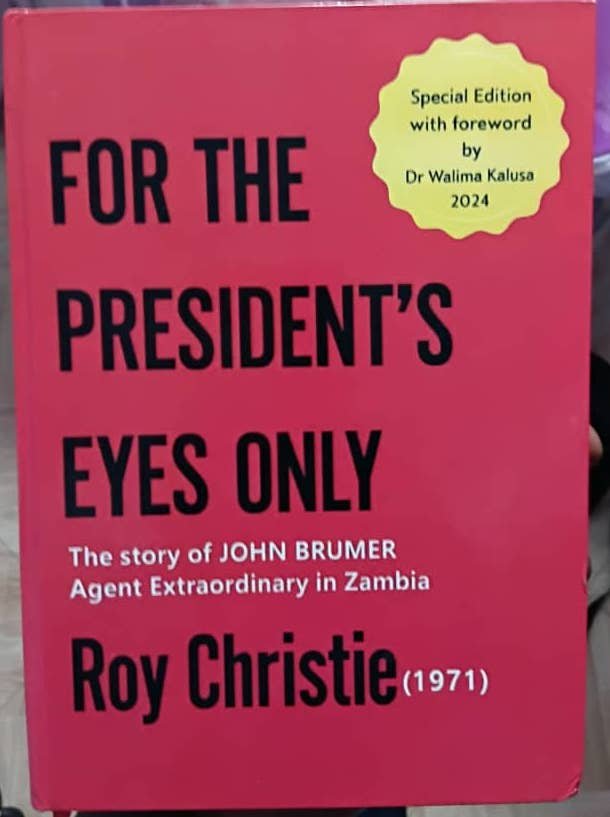
The history of liberation is still being written and this account is but one of many narratives emerging from the shadows. In the 1970s, there was a book Zambian authorities banned because of its controversial content. Now more than 50 years later, the book has been republished, prompting renewed debate around claims and perspectives that many outside the political establishment of then may never have encountered.
Roy Christie’s bookFor the President’s Eyes Onlyhas the pace and tension of an award-winning political thriller. Yet this is no work of fiction, well at least not entirely. A South African journalist now retired in England, Christie reconstructs an extraordinary episode from the height of the Southern African liberation struggle, exposing how intelligence games, deception and political urgency intersected at a formative moment in the region’s history.
At the centre of the book is John Henry Poremba Brumer, a Polish-born survivor of Nazi Europe whose unlikely journey takes him to Southern Africa in the early 1950s. Brumer’s life transforms from a hotel chef in Lusaka to a deeply embedded operative in the Rhodesian intelligence apparatus, tasked with infiltrating African nationalist movements at a time they were desperate for allies, funds and international legitimacy. One of the book’s most unsettling themes is the vulnerability of liberation movements to imposters and manipulators.
There were several white settlers who befriended liberation movements, professing sympathy for their cause. Brumer exploits this atmosphere masterfully, packaging himself as a committed supporter and thereby gaining the confidence of key figures in the Zimbabwe African National Union, including its top leadership led by Ndabaningi Sithole and Leopold Takawira, whom he regularly meets. Through covert recordings and reports, he feeds Rhodesian intelligence with valuable insights into the liberation movement’s plans and internal dynamics.
The narrative deepens when Brumer shifts his focus to newly independent Zambia, where he settles and from where he shuttles frequently between Lusaka and Salisbury. As Kenneth Kaunda takes charge of the country in 1964, Brumer reinvents himself yet again, this time as a well-connected intermediary offering privileged intelligence on Rhodesia.
[/paywall]
