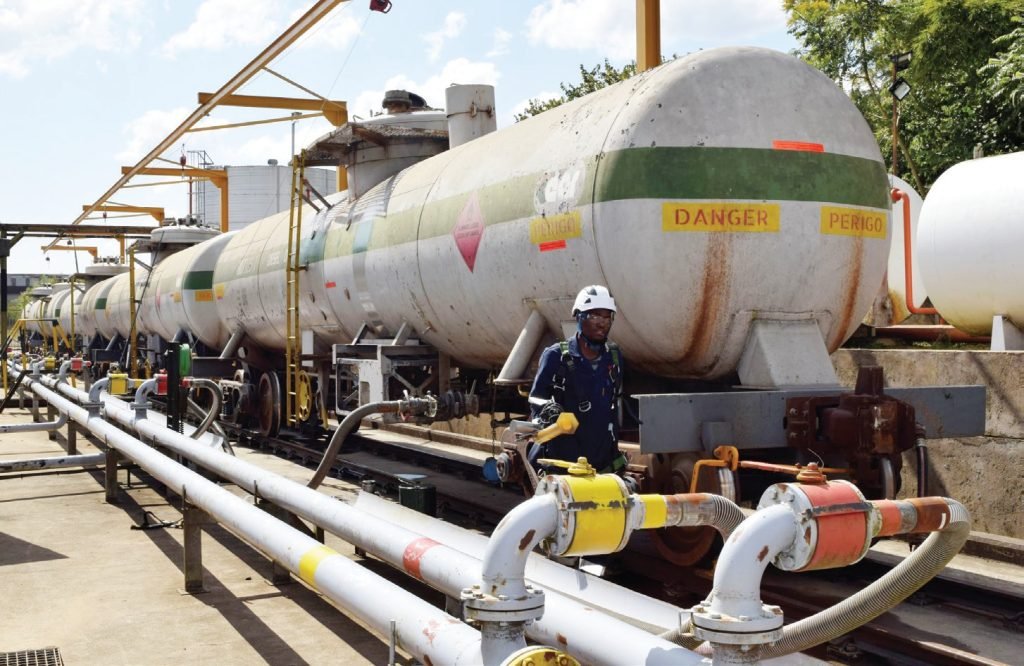
Ministry of Energy and Mining has announced plans to increase the country’s strategic fuel reserves capacity from 60 days to 120 days by 2030 to ensure stability security of fuel supply. This is coming four years after government also announced the expansion plans when the National Oil Company of Malawi (Nocma) said construction was expected to run from April 2022 to December 2024. In a performance report, ministry said apart from foreign exchange shortages, the country’s fuel supply challenges emanates from lack of storage capacity.
The ministry said that expanding strategic fuel reserves capacity is key because the limited capacity, compared with the current two million litres daily fuel demand, contributes to volatility of fuel supply in pump stations. Reads part of the report: “The nation’s current daily fuel demand is estimated at two million liters. However, supply falls short of this requirement due to the limited strategic fuel reserve capacity of 60 million litres and ongoing foreign exchange constraints that affect the maintenance of adequate fuel stock levels.
“To address these challenges, the government, through Nocma, is undertaking an expansion of the strategic fuel reserves from 60 million litres to 120 million litres, with Blantyre, Lilongwe and Mzuzu each set to gain an additional 20 million litres in holding capacity.” In addition, according to the ministry, the government has finalised agreements for the construction of rail fuel offloading facilities in Lilongwe and Blantyre, which are expected to enhance the efficiency and speed of fuel deliveries through rail transport. This means that the Blantyre and Lilongwe fuel reserves will each increase its capacity from 25 million litres to 45 million while Mzuzu reserve will more than triple from 10 million litres to 30 million litres. In an interview on Monday, Chamber of Mines and Energy national coordinator Grain Malunga said expanding the strategic fuel reserves is critical subject to affordability.
[paywall]
“For landlocked countries, such facilities are critical to ensure stability of fuel supply but such a project will depend on government’s coordination with development partners because the current reserves were financed by Exim Bank of India,”he said. The reserves were constructed with a $26 million (about K20 billion) loan from Exim Bank of India. The idea to build the reserves was conceived at a time the country witnessed one of the worst fuel shortages between 2010 and 2012.
The reserves are critical to landlocked Malawi as they ensure security of fuel supply particularly in times of shortages. Southern African Development Community regulations require their member States to have 90 million litres of fuel reserve capacity. The 60-million litre strategic fuel reserves only stock fuel for 30 days.
[/paywall]
