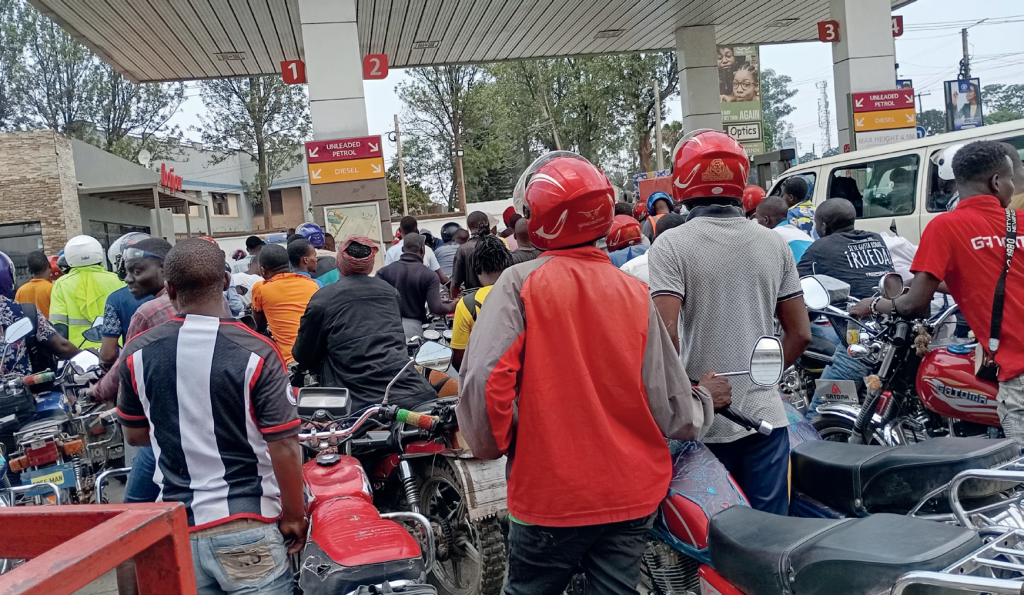
Malawian consumers will have to brace for tough times ahead following Malawi Energy Regulatory Authority (Mera) decision to raise fuel pump prices by an average of 41.6 percent effective yesterday. The increase, which is in line with Automatic Pricing Mechanism (APM), now puts a litre of petrol at K4 695 from K3 499 and diesel at K 4 945 from K3 500 and comes five months after Mera implemented a 33.16 percent fuel pump price increase in October last year. The hike threatens monetary policy gains that were projected to be accrued from declining inflation rate, which is currently at 26 percent as of December 2025, according to the National Statistical Office (NSO).
In a statement released at dawn yesterday, Mera board chairperson Lucas Kondowe justified the increase, saying it will help to sustain fuel supply. He said the adoption of APM, which was abandoned three years ago in favour of a fixed pricing regime, was commercially unsustainable. Reacting to the increase yesterday, Consumers Association of Malawi executive director John Kapito said if not for the abandoned APM, gradual fuel adjustments would have helped protect consumers from a one-time huge increase and scarcities.
On her part, Centre for Social Concern economic governance officer Agnes Nyirongo said in an interview that for a country already battling high inflation, food insecurity, unemployment and a weak currency, the increase in fuel price is not just a policy adjustment, “it is a direct assault on household survival”. She said public transport operators are already adjusting transport fares with commuters who previously spent K2 500 a day to get to work now needing over K3 500 while food prices are expected to rise immediately. Scotland-based Malawian economist Velli Nyirongo said yesterday that the fuel price hike is bound to complicate the monetary policy outlook at a time inflation had begun to moderate.
[paywall]
He said: “Fuel is a key input across the economy, so a sharp increase of this magnitude will quickly translate into higher transport costs, food prices and production expenses. “This creates a renewed cost-push inflation shock that is largely outside the direct control of monetary policy.” For two months running, Malawi’s year-on-year inflation rate has continued to decline, falling to 26 percent in December 2025 from 27.9 percent in the previous month due to declining food prices, according to NSO. According to the NSO December 2025 Consumer Price Index, food inflation declined to 26.5 percent down from 30.1 percent while non-food inflation rose to 25.2 percent from 24.2 percent during the period under review, an indication that prices of non-food items like transport and services went up a bit faster. Last week, Reserve Bank of Malawi Deputy Governor for operations Kisu Simwaka described the current inflation trend as a sign that inflation has turned the corner, which could pave the way for a policy rate cut to support economic growth.
[/paywall]
