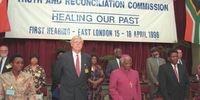
The Khampepe Inquiry into possible political interference in the NPA’s prosecution of apartheid-era crimes has prompted former presidents Thabo Mbeki and Jacob Zuma to challenge aspects of victims’ arguments. South Africa in the early and late 1990s was a place consumed not only by simmering violence, but also by an urgent mission to set a course for a new country. Before the ship could leave harbour, however, past atrocities and human rights violations had to be acknowledged.
It was the country’s first democratic president, Nelson Mandela, who, in an attempt to calm the heated political transitional temperature, expressed the government’s commitment to “national reconciliation” and “nation-building’, a position many younger South Africans have criticised and find politically kitsch. Today, many South Africans view this era as a time of broken promises and betrayed ideals. But those at the centre of this pivotal moment in our history had many balls to juggle.
Here are Mbeki and Zuma’s responses, drawn from the Rule 3.3 court documents in the Calata and others vs the South African government and others. Mbeki’s argument on TRC cases is centred on Mandela’s guiding vision of nation-building and reconciliation in the aftermath of years of violence, struggle and bloodshed. When tabling the final TRC report in 2003, Mbeki had argued that the state had to balance the need for legal accountability against the imperatives of managing the transition to democracy.
Read Full Article on Daily Maverick
[paywall]
He stated there would be no general amnesty, as such an approach would have flown in the face of the TRC process and the principle of accountability. However, he emphasised that many participants in the past conflict had not taken part in the TRC due to “calculated risks or misleading leadership”, and that this reality could not be avoided. Mbeki had proposed that while “normal legal processes” would apply, the state would work with intelligence agencies to enable those who still wished to speak the truth to enter into “standard arrangements” within the execution of justice.
In his reply, the former president explicitly denied any executive interference in the work of the National Prosecuting Authority (NPA) or that it had prevented prosecutors from pursuing TRC-related cases. Mbeki added that the ANC had been the “principal architect” of the Constitution and that his government had always acted with the knowledge that constitutional prescripts were binding.
[/paywall]
