Between Blantyre City and Mulanje Town, bikes carrying grass and milk tanks flash past. Unlike on many roads of Malawi, the cattle feed and urns on the Robert Mugabe Highway outnumber illicit charcoal bags on the move. These encounters proclaim a milk production boom in Mulanje and the surrounding districts.
“Dairy farming is big business and farmers cycle all the way from Chiradzulu, Thyolo and Phalombe to get grass for dairy cows. We had to join them or remain poor,” says Christopher Nkhoma, from Golden Village in Mulanje. He is one of the founders of Golden Dairy Cooperative, comprising 68 men and 32 women.
They view milk production as their pension and a trusted weapon in the fight against poverty. The group received a K129 million grant from Government of Malawi’s Agriculture Commercialisation (Agcom) Project to acquire 100 dairy cows, animal housing and milk urns. Today, they sell milk to Lilongwe Dairy through Chisitu Milk Bulking Group under the Shire Highlands Milk Producers Association, a union of over 12 000 farmers in at least 35 bulking groups across five districts: Blantyre, Zomba, Thyolo, Chiradzulu and Mulanje.
[paywall]
The country’s largest union of milk producers received a K1.2 billion matching grant from the $326 million flagship initiative to boost agricultural productivity, value addition and commercialisation, a central pillar of Malawi’s vision to become a self-reliant, industrialised middle-income economy by 2063. Agcom—funded by World Bank and Multi-Donor Trust Fund bankrolled by the European Union, Ireland, Norway and Flanders—is part of a four-nation Food Systems Resilience Programme running concurrently in Malawi, Somalia, Kenya and Comoros. The project supports a series of training in artificial insemination skills and standards for farmers like Nkhoma to get more milk, meat and money.
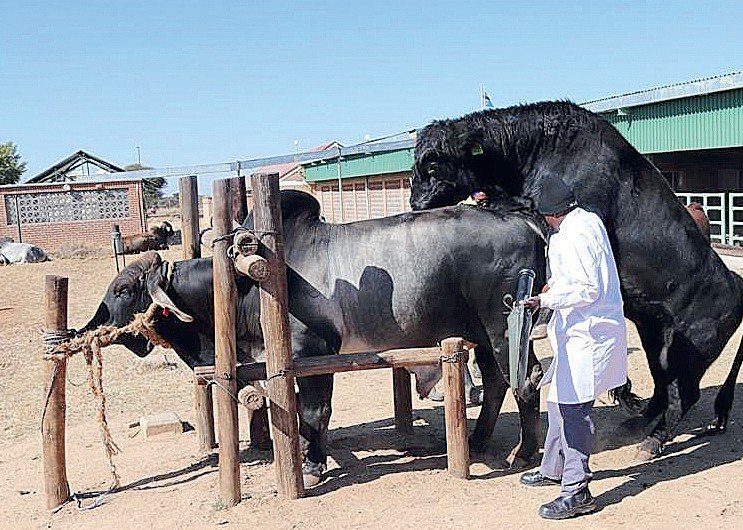
For years, both new and seasoned farmers have endured a long, costly and frustrating search for hybrid calves worth K600 000 to K1 million. The problem? Semen purchased from Mikolongwe Research Statio, the National Artificial Insemination Coordination Centre, arrives on the farm either stale or too late for the animal in heat.
This frustrates not only the farmers but also Fatima Kazembe, the national artificial insemination coordinator in the Ministry of Agriculture. “Some give up while others come to complain,” says the animal scientist, based at Mikolongwe.
[/paywall]
