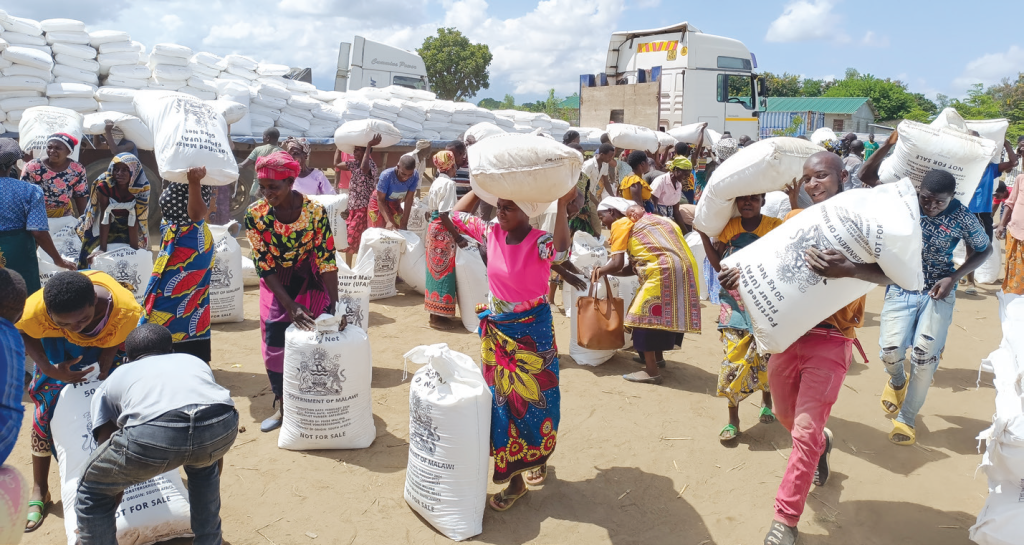
Department of Disaster Management Affairs (Dodma) has expressed optimism that it will mobilise additional support from development partners to cover a K71 billion funding gap in the 2025/26 Lean Season Food Insecurity Response Programme. “This leaves us with a K71 billion deficit, but we remain hopeful that more partners will come forward to help us meet the target,” he said, citing Press Agriculture Limited as one such partner. Kasungu district commissioner Lawford Palani appealed to the government to consider extending the relief food programme in the district to March, saying most households are still vulnerable as crops remain at early growth stages due to late rains.
This is why chiefs and other stakeholders are asking for an extension to prepare families for the next harvest,” he said. In response, Moleni said Dodma has also observed that crops will not be ready by February, but warned that extending the programme would further strain limited resources. “An extension would increase the deficit, but we will consider the request.
If additional support comes in, we will extend the programme,” he said. “No country can develop when its people are hungry. As a Malawian company, we felt compelled to support families affected by hunger in Kasungu and Mchinji,” he said.
[paywall]
One of the beneficiaries, Nickson Chigumika of Chilangiza Village in Senior Chief Chilowamatambe’s area, said the assistance had come at the right time. “My grandchildren and I have been surviving on maize bran. This maize means we can now eat proper nsima.
I appeal to government to also consider other hunger-stricken families,” he said. Malawi Vulnerability Assessment Committee 2025 report projected that over four million Malawians were at risk of severe food insecurity during the 2025-26 lean season from October 2025 to March 2026. In June last year, the World Food Programme (WFP) projected Malawi’s maize deficit at 1.2 million metric tonnes (MT) or 33 percent of harvest.
The national annual maize requirement is 3.7 million MT. Earlier, Ministry of Agriculture, Irrigation and Water Development had projected a maize deficit of 537 380MT in the 2024/25 growing season with Parliament approving K99.5 billion in the 2025/26 National Budget towards irrigation development to produce 337 000MT of maize on 56 113 hectares of irrigable land, which is still below the projected deficit. The ministry’s strategy to bank on irrigation to cover the maize deficit and stabilise prices drew criticism, with agriculture policy experts casting doubt on its practicality.
[/paywall]
