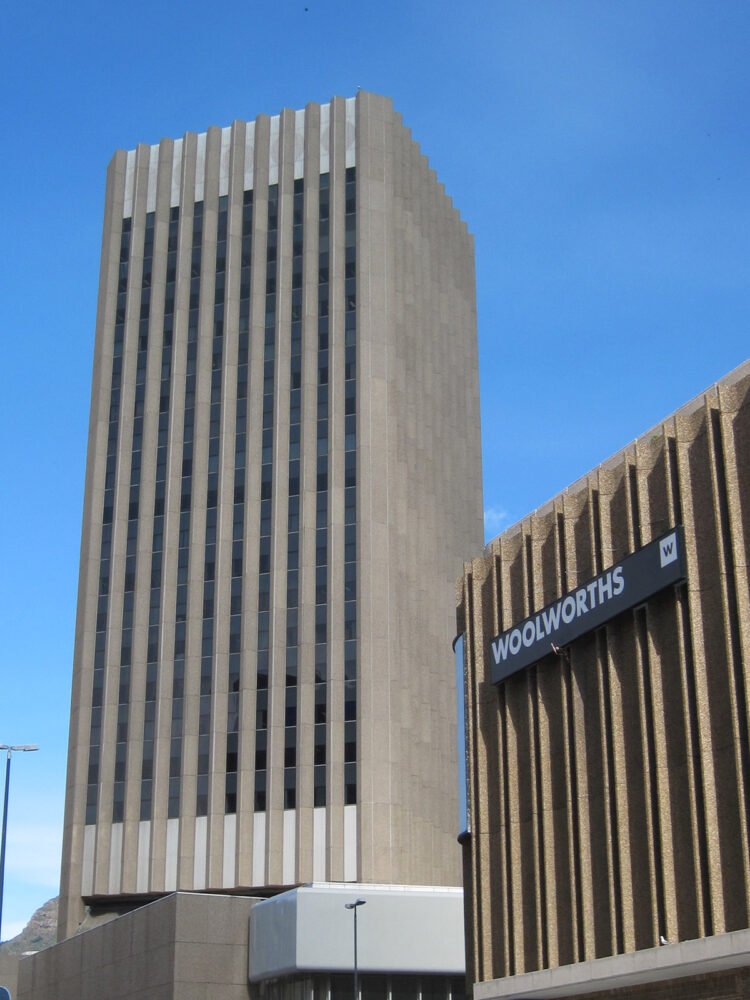
Cape Town has a knack for reinventing familiar buildings. Whether it’s heritage conversions or office-to-residential projects, I am obsessed with how the city transforms the narrative of concrete. Recently, I tweeted about the sale of the iconic Golden Acre complex, which sparked a flood of memories in the comment section.
Some remember buying their first pair of Dr Martens boots here, celebrating their birthday at Mike’s Kitchen, while others watched Karate Kid for the first time at the cinema. Having walked through the building many times on my way to university and later, as a commercial property broker on the upper floors, trying to lease the large floor plates to call centres, I share the same nostalgic feelings many others have about the building. Most Capetonians are familiar with the site but not many know the history behind the iconic building.
Long before the soft serves, Mac Munch burgers, bus queues and bargain shopping, the site served a different purpose. During the initial construction of the Golden Acre, workers made a remarkable discovery. Before pouring concrete and erecting steel frameworks, they uncovered the remains of one of South Africa’s oldest Dutch structures.
Read Full Article on Mail & Guardian
[paywall]
The site sits on what was once the original coastline. Back in the day, the Foreshore suburb was completely submerged under the ocean. During excavation, remnants of a storage dam built in 1663 were discovered.
The South African Museum stepped in to excavate and preserve the ruins, now known as the Golden Acre Ruins. In the 1600s, Cape Town’s biggest challenge was water. When Jan van Riebeeck arrived in 1652, he built a dam to supply fresh water to ships and to support early agriculture.
It quickly became clear that it was not enough, as they needed much more drinking water for locals and crews on visiting ships. A few years later, the Commander of the Cape Colony, Zacharias Wagenaer, commissioned a far more ambitious structure. Built between the sea and the Fort, the dam was known as the New Bowl, or Wagener’s Tank.
Stone and brick walls were constructed by masons, along with wooden sluice gates to control water flow. It took two months to get the reservoir measuring 15m wide, 45m long and 1.5m deep, capable of holding up to 700 000 litres of drinking water from the Farshe River. A 1m-high wall surrounded it for safety and four flights of steps were added so sailors could draw water directly.
What now fuels food courts and foot traffic once sustained an entire port city. Today, those dam remains are preserved inside the shopping centre itself behind glass, declared a National Monument and quietly existing alongside fast food counters and cellphone repair shops. Most people walk past them without realising what they are looking at.
[/paywall]
