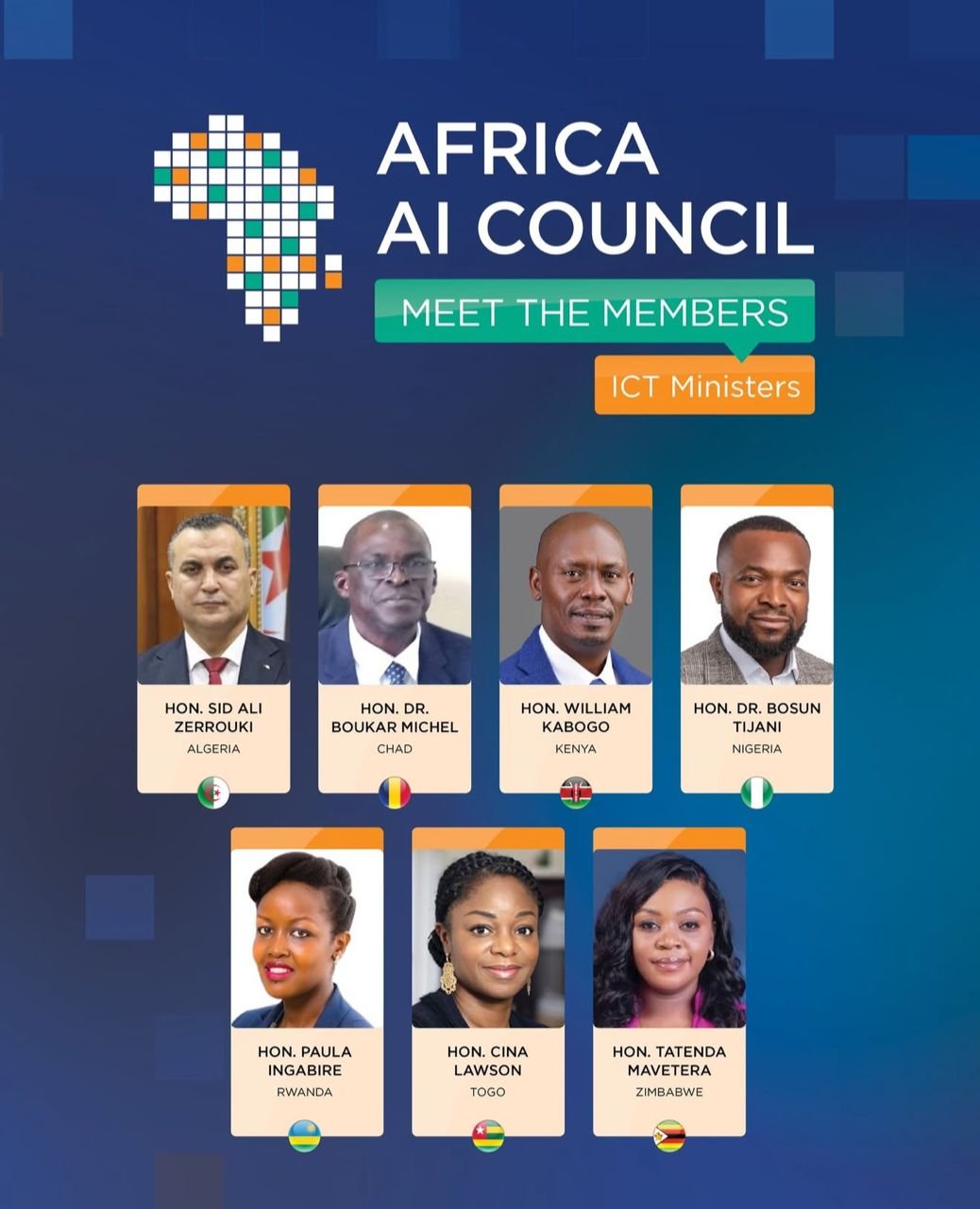
Zimbabwe has strengthened its influence over Africa’s digital future with the appointment of its Minister of Information and Communication Technology to the newly formed Africa Artificial Intelligence Council, a body designed to coordinate how artificial intelligence is governed and deployed across the continent.
Conakry, Guinea
The council was announced Monday under the Smart Africa initiative, a high-level effort to assert what African leaders increasingly call “digital sovereignty” — reducing reliance on Western and Chinese technologies in favor of systems built on African data, languages and priorities. Oversight of the council will come from a board chaired by President Paul Kagame of Rwanda and composed of 42 African heads of state.
The Minister is one of only seven ICT ministers selected after a competitive process that Smart Africa said drew more than 400 applicants from 57 countries, vetted in partnership with the African Union Commission and the International Telecommunication Union.
Zimbabwe’s inclusion reflects a rapid policy ascent. In November 2025, the cabinet approved a National Artificial Intelligence Strategy, placing the country among a small group of African nations with a formal framework governing the ethical use of A.I. That strategy aligns with the Nairobi Declaration, the continent’s foundational A.I. policy document ratified at the Transform Africa Summit.
A key factor behind Zimbabwe’s selection is its leadership in digital agriculture. Under Smart Africa, the country has served as the continental lead for agritech, applying artificial intelligence to weather forecasting, crop optimization and food security. Its Continental Agritech Blueprint has since been adopted as a reference model by other governments seeking to modernize agriculture amid climate stress.
Globally, A.I. regulation has focused on safety and privacy. Africa’s approach, council officials say, will emphasize development — closing the digital divide, training local talent and ensuring that A.I. systems reflect African cultures and languages. The council’s first priorities include creating a Pan-African A.I. Research Center, launching an A.I. Talent Readiness Index and finalizing a data sovereignty framework governing how global firms use African data.
The Nairobi Declaration also calls for regulatory harmonization through a pan-African sandbox and backs the creation of a $60 billion Africa A.I. Fund by 2030 to address the continent’s limited computing power.
For Zimbabwe, the Minister’s appointment secures a seat at the center of these decisions, positioning the country not just as a participant in Africa’s digital transformation, but as one of its architects.
