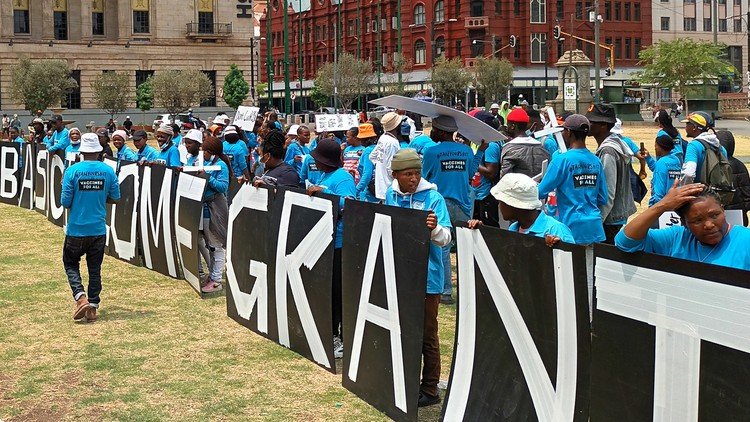
The future of thesocial relief of distress(SRD) grant beyond the March 2027 extension remains uncertain. The national treasury has confirmed that there are “no fixed timelines” for finalising proposals on what will replace the R370-a-month grant. In the medium-term budget policy statement tabled in November, Finance Minister Enoch Godongwana said the SRD grant would be extended “while proposals are finalised to link the working-age population to skills development and employment programmes”.
The grant has been a lifeline to the eight million people currently receiving it. “The intention is to complete policy refinement before the 2026 medium term policy statement to ensure alignment with fiscal planning and implementation priorities,” the treasury said. The department of social development is leading the process while working with key organs of state like the department of employment and labour and the treasury.
The treasury did not specify whether the grant could become conditional or evolve into a universal basic income. It said once policy proposals are approved by cabinet, “the policy will be shared with the public”. Social development acting head of communication Sandy Godlwana said the SRD grant was always temporary and “has to be replaced by a permanent provision in the form of Basic Income Support (BIS)”.
Read Full Article on Mail & Guardian
[paywall]
She said the BIS draft policy was presented to cabinet’s social protection, community and human development cluster committee in November 2024. “Key to the proposal is linking beneficiaries to sustainable livelihoods and economic opportunities,” Godlwana said. She added that the committee had asked the department to strengthen specific aspects such as affordability, eligibility, and employment linkages.
“While no final timeline has been set, the intention is to re-table a draft policy in 2026/27 financial year.” Researchers and civil society groups argue that linking social assistance to skills development or work-seeking requirements “misunderstands the nature of the crisis”. In an analysis published by Econ3x3, researchers argue that the way unemployment is framed has shaped ineffective policy responses. When unemployment is treated as a crisis of jobseekers, attention is directed toward people’s “qualifications and skills, their job-seeking strategies, their attitudes”, turning “the jobseeker” into “the problem to be solved”. This framing, the researchers argue, has produced “another skills certificate, another work-readiness intervention, another CV workshop”, while avoiding “a well-understood, yet inconvenient, structural reality: there are not enough jobs”.
[/paywall]
