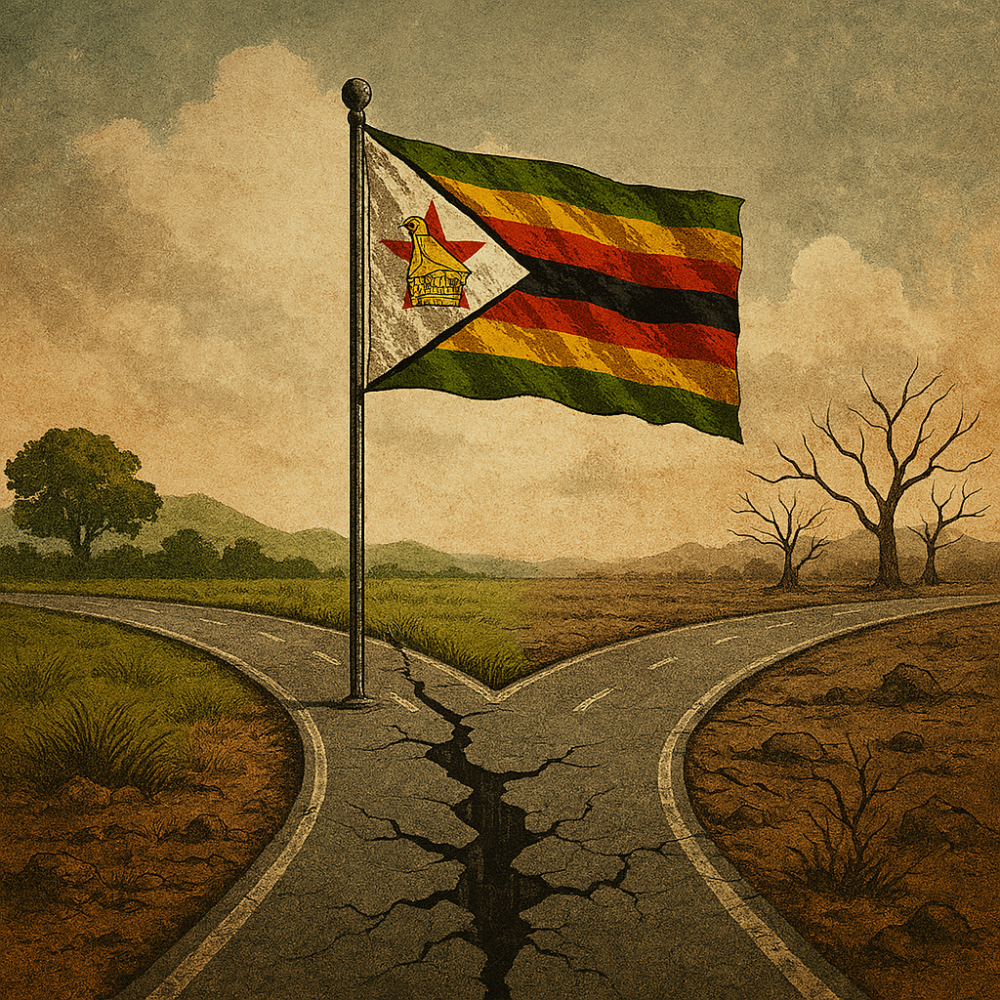
Zimbabwe today stands as one of the most sobering case studies in the cyclical pathology of post-liberation governance, a nation where the promise of emancipation has curdled into the practice of entrenchment. The whispers surrounding President Emmerson Mnangagwa’s alleged bid to extend his rule beyond the constitutionally mandated 2028 are not idle chatter; they are symptomatic of a deeper malaise afflicting post-colonial states across Africa, which is the inability to translate liberation into legitimate succession. The irony is not merely historical; instead, it is structural.
A regime born of a coup now toys with the same authoritarian instruments it once claimed to dismantle constitutional revisionism, elite patronage, and the systematic silencing of dissent. What is presented as reform is, in fact, relapse and relapse in Zimbabwe is not a domestic inconvenience; it is a continental warning. Mnangagwa’s succession gambit must be read against the broader global canvas of authoritarian resilience.
From Vladimir Putin’s Russia to Xi Jinping’s China, from Erdoğan’s Turkey to Hun Sen’s Cambodia, the manipulation of constitutional limits has become the preferred choreography of strongmen who seek to cloak permanence in the language of legality. Zimbabwe’s flirtation with this model situates it squarely within a global trend of democratic backsliding, yet with one crucial distinction: unlike Beijing or Singapore, Harare has no infrastructural miracle or technocratic dividend to justify its authoritarian relapse. It offers only stagnation dressed as sovereignty.
Read Full Article on Mail & Guardian
[paywall]
This is the pathology of post-liberation governance: longevity without legacy, power without progress. Zimbabwe’s succession crisis is not simply about Mnangagwa versus Chiwenga, nor about the opposition’s disarray. It is about whether Africa can escape the gravitational pull of liberation movements that have perfected the art of survival while failing at the craft of transformation.
The stakes are continental, the implications global. Zimbabwe’s next general election, constitutionally scheduled for on or before 3 September 2028, is ostensibly meant to be a routine exercise in democratic renewal, presidential, parliamentary, and local government contests that should reaffirm the people’s sovereignty, yet the calendar itself has become contested terrain, a battlefield where the very notion of electoral certainty is under siege. President Emmerson Mnangagwa’s allies, emboldened by their proximity to power and the obscene wealth accumulated through rent-seeking and prebendal patronage, are reportedly manoeuvring to amend the constitution to extend his tenure by at least two years.
This is not the language of reform; it is the grammar of entrenchment. What is dressed up as “Vision 2030” is less a developmental horizon than a cynical smokescreen for authoritarian permanence. The project is not about building a modern Zimbabwe; it is about insulating a ruling elite from accountability, buying time for patronage networks to deepen their grip, and ensuring that succession remains a closed script authored within ZANU-PF’s inner sanctum.
Placed within a global frame, Zimbabwe’s manoeuvre mirrors the constitutional manipulations of Vladimir Putin in Russia, Xi Jinping in China, and Recep Tayyip Erdoğan in Turkey, leaders who have perfected the art of bending legal frameworks to sanctify political longevity, yet unlike Beijing’s infrastructural miracle or Singapore’s technocratic dividend, Harare offers no compensatory narrative of transformation. Its bid for continuity is visionless, producing neither megacities nor modern economies, only the recycling of power without progress. The 2028 election timeline, therefore, is not merely a date on Zimbabwe’s political calendar; it is a litmus test of whether post-liberation states can escape the gravitational pull of authoritarian relapse.
If Mnangagwa succeeds in rewriting the rules of succession, Zimbabwe will not only betray its own constitutional order but also reinforce the continental pathology of liberation movements that cling to power while hollowing out the state. The rumours of state capture in Zimbabwe are not idle whispers; they are the lived architecture of a nation where prebendalism has been institutionalised into the marrow of governance. What masquerades as economic empowerment is, in truth, the systematic enrichment of a grotesque new aristocracy of sycophants, Paul Tungwarara, Kudakwashe Tagwirei, Scott Sakupwanya, Wicknell Chivhayo, George Guvamatanga, and others, whose fortunes are not the dividends of innovation, enterprise, or merit, but the spoils of proximity to ZANU-PF’s ruling elite and, above all, to the president himself.
Their wealth is not accidental; it is the currency of loyalty in a system where political patronage has replaced productivity as the engine of accumulation. This is the anatomy of state capture: a political economy where financiers and fixers, lubricated by rent-seeking and prebendal privilege, become indispensable to the regime’s survival. They are not merely beneficiaries; they are the scaffolding of Mnangagwa’s power, underwriting his ambitions with cash, networks, and the spectacle of conspicuous consumption.
In this sense, Zimbabwe’s crisis is not only political, but it is structural, a fusion of authoritarianism and crony capitalism that corrodes the very possibility of reform. When Daniel Garwe, ZANU-PF’s Mashonaland East chairman, declared there would be “no elections in 2028,” he was not indulging in rhetorical excess. He was articulating the regime’s creeping ambition to bypass the ballot altogether, cloaking authoritarian permanence in the technocratic language of Vision 2030.
The statement crystallised what many Zimbabweans already suspect: that the constitutional calendar is being rewritten not in parliament, but in the backrooms of patronage, where financiers and factional barons dictate the tempo of succession. Mnangagwa’s push for extension is therefore not simply a domestic succession gambit; it is a continental warning. It signals the entrenchment of a governance model where liberation credentials are weaponised to justify authoritarian relapse, and where the ballot is treated not as a covenant with the people, but as an inconvenience to be postponed, bypassed, or nullified.
[/paywall]
