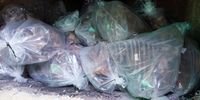
A blaze consuming nearly half a tonne of lion remains exposed both the cruelty of the captive-breeding industry and the political turmoil threatening to revive it. At 10am on Wednesday, 10 December, an incinerator somewhere in Gauteng came alive with a roar, superheated flames instantly melting the plastic bags around the bones of 42 lions. It was dramatic, symbolic and garishly real.
Ribs, leg bones and snarling skulls blackened in the intense heat as the doors of the hellish cauldron slid shut, having given observers a brief glimpse of the blaze that would reduce nearly half a tonne of lion remains to ash. Symbolic, because an estimated 8,000 to 10,000 lions still live behind fences on breeding farms across South Africa. But also a statement – a stark, emotional reminder that in a humane society, dead lions should have zero value.
Those who had come to witness the burn – provincial government officials, a handful of NGOs, Kobus Steyn (the dealer who owned the bones) and Lord Michael Ashcroft – stepped back from the heat, visibly shaken by the spectacle. For most of them this was a moment shaped by years of work to shut down the captive lion breeding industry. Instead of triumph, however, there was gathering concern.
Read Full Article on Daily Maverick
[paywall]
A government process to phase out captive lion breeding – painstakingly built through panels, parliamentary colloquiums, white papers and cross-sector collaboration – had been abruptly destabilised. The minister who’d backed animal wellbeing reforms and a halt to the lion-bone trade had been suddenly removed and a replacement aligned with breeders and hunters installed, raising serious concerns. Lord Ashcroft, invited to the burn by the previous minister after years of involvement in the campaign, did not mince words: “This is a trade that needs to and has to be banned.
This is awful. Such cruelty too. And what’s it all about?
Profit motive by a few unscrupulous operators who farm captive-bred lions.” His commitment was unequivocal: to push for international condemnation, leverage global support and accelerate the end of the industry. His book Unfair Game – repeatedly cited by NGOs and government team members – provided much of the early political momentum that ultimately shaped the current policy direction. Steyn, who had bought the bones from a lion farmer in the hope of selling them at a profit, stood quietly at the edge of the crowd.
For him, the burn was deeply personal. “I’ve seen where they come from. I’ve seen some of them alive,” he said.
“So that’s where the emotion comes from.” His account showed the strange duality of the captive lion industry – part business, part burden and eventually, for him, a moral weight he no longer wished to carry. The export quota for lion bones was stopped in 2019 when the high court ruled that the setting of the bone quota in 2017 and 2018 was “unlawful and constitutionally invalid” and that consideration should have been given to welfare issues relating to lions in captivity when determining the quota. As a result, the remains of those animals had stayed on his property for seven years.
During that time the risks grew. He described the farm environment as dangerous. Protecting the bones had become both a liability and a psychological strain.
Voluntary exit was, for him, a relief. “Economically, it doesn’t make sense… but morally, absolutely. It’s not a nice business to be in. This is a solution, actually.”
[/paywall]
