Since the turn of the century, the Rainbow Nation myth has been increasingly portrayed as irrelevant to the business of running South Africa and renewing its promise. But can South Africa overcome the devastating legacies of the past, strengthen its democracy and unify a fracturing nation without it? Every nation needs a story.
Most nations are accidents of history: different groups of people thrown together by circumstance. Occupying the same territory, their lives and futures are linked. Founding stories – myths – help stitch them together by transmitting shared values and hopes.
Without these stories, nations struggle to make sense of themselves. The best stories have an enormous capacity to persuade and influence. They are never entirely rational.
Read Full Article on Daily Maverick
[paywall]
Origin myths, in particular, oversimplify history and mask contradictions. But if they are unique and compelling, evoke our deepest emotions, and even reveal something of the sacred, their power is almost limitless. No country ended the previous century with a better story than South Africa.
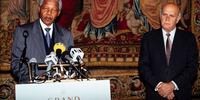
Its perilous leap from a racial oligarchy to a nonracial democracy in the 1990s captivated the world’s imagination. Archbishop Desmond Tutu famously described the new country that came into being as the “Rainbow Nation”. United under the saintly figure of Nelson Mandela, South Africa became a beacon for societies grappling with tensions and divisions.
Its international clout soared. In the 2000s this changed. Growing factionalism within the ANC put nation-building on the back burner.
Politics became consumed by ideological clashes and scheming over state resources. Some in Mandela’s party became disillusioned with the founding story. Others neglected it.
Or even undermined it. Few saw it as especially useful in their bid for power. Soon, the story became buried in the avalanche of corruption and misrule that followed.
Today, South Africa is rudderless at home. According to an Ipsos “What Worries the World” study released in September, eight in 10 South Africans believe the country is headed in the wrong direction. Three months of testimony at the Madlanga Commission have fortified characterisations of South Africa as a “mafia state”.
Just over a week ago, former president Thabo Mbeki despaired: “I don’t know where South Africa will be tomorrow.” What more needs be said of Johannesburg? Water and energy infrastructure in the city is crumbling. Its politics – nine mayoral changes in six years – are farcical.
This would be scandalous for any major city. But for a country’s – and the continent’s – financial and economic hub, it is near inexplicable. Turmoil at home has eroded South Africa’s standing abroad, not least across Africa where it was once viewed as the “natural leader” owing to its economic might and exemplary democratic transition.
Today, Pretoria is irrelevant in places on the continent where it should be making a difference – Tanzania, Sudan, central Africa. Globally, the founding vision that human rights would be the light that guided South African foreign policy eventually dimmed as ANC officials kowtowed to more and more repressive regimes. Their much-praised case against Israel at the International Court of Justice does not affirm South Africa’s moral stature inasmuch as it highlights how selective their condemnation of injustices worldwide has become.
In June 2025, President Cyril Ramaphosa announced the establishment of the National Dialogue. It was billed as the most important conversation about the future of the nation since the end of apartheid. It would be, Ramaphosa declared, a historic opportunity for South Africans “from all walks of life to come together… to reflect on the state of our country”.
[/paywall]
