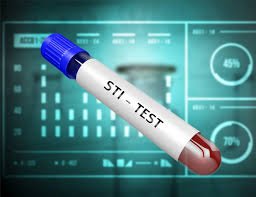
Worrying levels of sexually transmitted infections (STIs), including a steady rise in new cases and a high number of repeat infections, are fuelling concern among health authorities in Bulawayo, Zimbabwe’s second-largest city, amid fears that the trend could reverse gains made in HIV prevention. Bulawayo National AIDS Council (NAC) Programmes Officer, Douglas Moyo said the city was witnessing patterns that pointed to persistent risky sexual behaviour, weak behaviour change, and heightened vulnerability to HIV infection. Moyo said STIs remained a critical public health issue because of their direct link to HIV transmission.
“The topical issue now of sexually transmitted infections STIs. HIV is transmitted easily when one has a sexually transmitted infection. Because sexually transmitted infections would provide easy passage through the breaking of the skin.
Such that there is an easy entry,” he said to the media recently while giving the latest Bulawayo HIV Programmes Update. Moyo explained that infections such as syphilis, gonorrhoea and chlamydia significantly increase susceptibility to HIV and act as markers of high-risk sexual behaviour. “If you walk into any health facility, be it a private doctor or a clinic with an STI.
[paywall]
This is clear evidence that ‘here is somebody who exposed themselves through having condomless sex or who had an accident somehow during the sexual encounter,’” Moyo said. Drawing parallels with pregnancy, Moyo said STIs and PMTCT data both point to unprotected sex. “Just like somebody who walks into a facility, they are pregnant, it’s evidence that they had unprotected sex, isn’t it?
Because there is no way they could get pregnant if they were protected. So those two, PMDCT and STI, are key evidence of unprotected sexual intercourse. But the one that we are most worried about is this one -Sexually transmitted infections,” he said.
Data from the first three quarters of the year shows a troubling upward trend. In the first quarter alone, Bulawayo recorded 2 194 new STI cases. “Look at the trend.
Look at what happened in the first quarter. Quarter one, we had 2 194 new cases underline the word new and a quarter has only three months. In just three months, we recorded 2 194 STI cases,” Moyo said.
He said all STI patients are routinely tested for HIV, with the data revealing persistent HIV positivity among those presenting with STIs. “And then the management protocol now for STIs is that anyone who presents with an STI should be tested for HIV. then we can see the positivity rate was 4 percent,” he said.
[/paywall]
