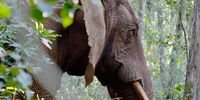
Strangefoot, the Knysna Forest’s last wild elephant, continues to walk alone while a privately funded plan to reintroduce companions stalls and is withdrawn Deep in the moss-slicked silence of the Knysna Forest is a single trail of huge footprints. They belong to Strangefoot – the last living member of what was once the world’s southernmost free-roaming elephant population. She moves alone through the forest’s filtered green light, a living relic and a reminder of how quickly a landscape can lose its memory.
For years, conservationists, scientists and members of the public have asked a simple question: Does Strangefoot need companionship?And if so, why haven’t we acted? It’s a question that has animated public meetings, stirred petitions and inspired one of the most comprehensive privately funded rewilding proposals the region has ever seen. And although that project has now formally been withdrawn, the story behind it remains one of passion, possibility and profound loss – but also one that continues to inspire.
Elephants have been shaping Knysna’s dense Afrotemperate forests for millennia. They’re keystone species – engineers that open pathways, disperse seeds and maintain ecological structure. Without them, an ecosystem begins to shift.
Read Full Article on Daily Maverick
[paywall]
A previous attempt to introduce three orphaned elephants failed. They came from a flat coastal area, were already traumatised and had no experience of browsing in a forest. They risked starvation and were relocated.
That liaison was doomed, because Strangefoot had a young calf (who died in 2000) of her own to look after and would probably have chased the orphans away. Without Strangefoot, the last remaining ecological thread to that long lineage may finally snap. For Herd Instinct – a coalition of elephant specialists and wildlife advocates – the ethical argument is just as powerful as the ecological one.
Elephants are deeply social, emotionally complex beings. To allow Strangefoot to live out decades of isolation is, in their view, incompatible with any modern understanding of welfare or responsible conservation. And they are not alone in this belief.
Independent surveys conducted by market survey specialist Alan Powell found overwhelming public support for reintroducing a small group of companions to the forest. Friends of the Knysna Elephant measured it at 81% across demographic groups – an extraordinary consensus in a region where environmental decisions are often contested. The original rewilding proposal was both ambitious and pragmatic.
Herd Instinct, with the Knysna Elephant Park making suitable elephants available, had identified three ideal, acclimatised elephants for release – individuals already familiar with the region’s vegetation, climate and social complexity. They were ready. The team was assembled. The funding – R5-million in private capital – was secured.
[/paywall]
