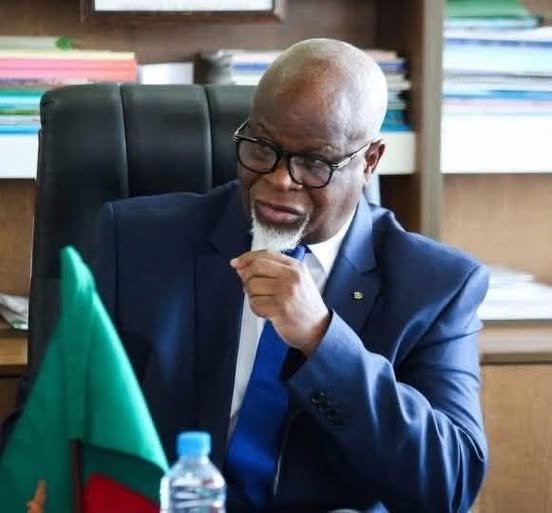
Minister of Health Elijah Muchima has officially opened the Regional One Health Conference for Eastern and Southern Africa with a call for stronger cross-sector and cross-border collaboration to tackle rising health threats affecting humans, animals and the environment. Muchima said Africa is grappling with growing challenges such as climate change, zoonotic diseases, food safety threats and antimicrobial resistance all of which require coordinated action rather than isolated responses. He explained that rapid urbanisation, land-use changes, migration and expanding trade are increasing interactions between humans, livestock, wildlife and ecosystems, thereby heightening health risks.
Dr.Muchima told delegates that fragmented responses weaken national and regional preparedness, whereas collective action enhances early detection, saves resources and prevents crises. “One Health is no longer a theory. It is a strategic necessity.
When we work together, we prevent crises before they escalate,” he said. Highlighting Zambia’s progress, Dr. Muchima noted that the country established its first National One Health Strategic Plan in 2023 and now has coordination structures at national, provincial and district levels.
Read Full Article on Lusaka Times
[paywall]
He emphasised that regional health security is only as strong as the weakest link, urging SADC member states to harmonise policies, strengthen cross-border surveillance and enhance information sharing. He stressed that regional cooperation is not optional but essential. The Minister added that Africa’s youth should benefit from One Health initiatives through skills development, innovation and green job opportunities.
Muchima urged delegates to use the two-day conference to agree on practical measures to improve governance, strengthen surveillance, support climate-informed early warning systems and mobilise financing for prevention. And representing the Southern African Development Community (SADC), Longlet Kumboneki commended member states for their growing commitment to the One Health agenda, noting that recent outbreaks, including Mpox and Ebola, highlight the need for stronger regional solidarity. Meanwhile, African Union-InterAfrican Bureau for Animal Resources (AU-IBAR) representative Mary Mbole-Kariuki underscored the increasing burden of emerging and re-emerging diseases on the continent, noting that 75 percent of global zoonotic outbreaks have origins in Africa.
[/paywall]
