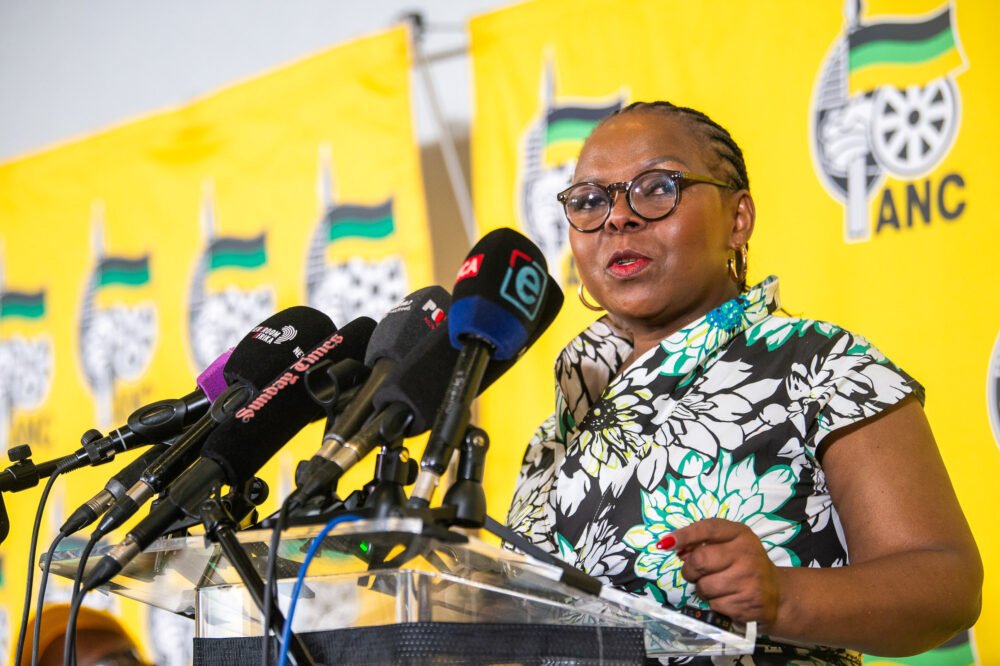
ANCnational spokespersonMahlengi Bhengu-Motsiriraised eyebrows when she insisted that the party was not corrupt, although some of its members might be. Asked about the party’s financial woes, Bhengu-Motsiri responded: “I always say that if the ANC was a corrupt party — not individuals — we would not be poor.” “We would be tapping into the resources of the state as a governing party,” she told a media briefing on the sidelines of the party’snational general council(NGC) in Boksburg. This was after workers at the ANC’s Luthuli House headquarters protested over their unpaid salaries on the first day of the NGC, the latest signal of financial challenges that saw the sheriff seize some of the party’s property over unpaid debt.
While delivering the ANC political overview earlier this week, PresidentCyril Ramaphosasaid corruption, criminality and factionalism would not be tolerated in the organisation. Political analysts said the scourge was endemic within the party and challenged Bhengu-Motsiri’s assertion of “a clean ANC”, saying there was no distinction between individuals and the organisation. The ANC was perceived as “synonymous with corruption, because it has not addressed the elephant in the room — the institutionalisation of corruption”, said Ntsikelelo Breakfast, an associate professor at Nelson Mandela University’s department of history and political studies.
Breakfast cited several disgraced ANC cadres who have been redeployed into government and party structures, with some assisting in election campaigning. Bhengu-Motsiri’s attempt to differentiate between the individual and party misconduct risks downplaying systemic problems that have allowed corruption to flourish, said Sethulego Matebesi, a professor at the Free State University’s department of humanities and sociology. “The party leadership must take a collective responsibility to strengthen governance and accountability mechanisms — if they are going to take this particular route about individualising corruption and misconduct,” Matebisi said. He said Ramaphosa’s frankness about corruption, criminality and factionalism within the ANC was “a necessary acknowledgement of the party’s internal challenges”.
Read Full Article on Mail & Guardian
