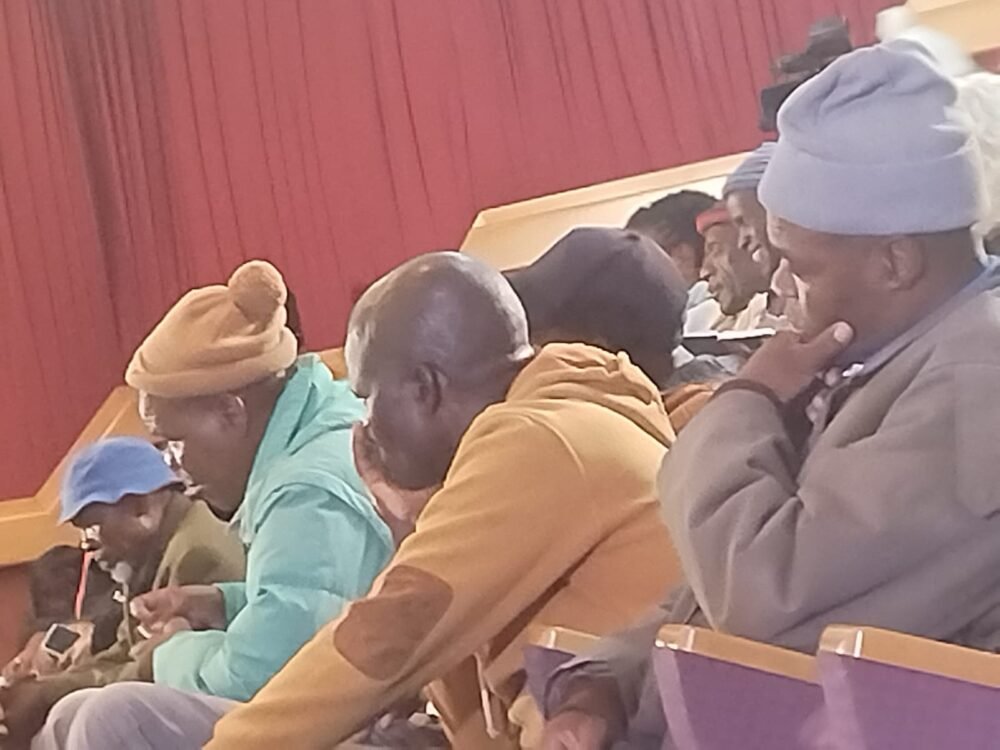
TheMining Affected Communities United in Action(Macua) has launched the 100-Year Debt Campaign — a national and global movement to demand accountability and reparations from mining conglomerateAnglo American. Former Anglo employees — some recovering from injuries sustained while working underground at the company’s mines and others being treated for tuberculosis andsilicosis— recently marched to the Old Johannesburg Stock Exchange in the Johannesburg central business district in protest. Macau has called on the mining giant to “take full responsibility for unpaid debts and abandoned communities”.
For over 100 years, Anglo American has extracted wealth from the deep gold shafts of Johannesburg to the platinum belts of Rustenburg and the coalfields of Mpumalanga, Macau’s Christopher Rutledge said at the launch of the campaign. “Founded in 1917 with the backing of British and American financiers, Anglo built its global empire on the backs of black South African workers, who were denied wages, rights, and safety in pursuit of profits that shaped the modern economy of London,” Rutledge said. He noted that Anglo transferred its primary listing from the JSE to London in 1999, retaining only a secondary listing in South Africa, and that over the past decade it has sold off key assets, including coal, platinum, and manganese operations, to foreign buyers or shell subsidiaries.
Anglo’s proposed merger with Canadian group Teck Resources was another step in its withdrawal from South Africa, he argued. “Theproposed Anglo–Teck mergerwill create a new Canadian-based entity called Anglo Teck, effectively completing its geopolitical relocation. This is not a mere business decision; it is a national crisis of economic sovereignty,” Rutledge said.
Read Full Article on Mail & Guardian
[paywall]
“Anglo’s departure will strip South Africa of future tax revenue, jobs, and leverage over one of the most historically significant extractive entities in our nation’s history. This is the economic blueprint of capital flight: wealth generated in South Africa is being reinvested elsewhere, with no restitution for the people and communities left behind.” He accused the Public Investment Corporation (PIC), which manages nearly R3.9 trillion in public funds and remains Anglo American’s second-largest shareholder, of failing to act in defence of South Africa’s national and public interest. “The PIC’s silence as Anglo relocates its assets and restructures abroad, represents not only a dereliction of fiduciary duty but also a betrayal of the workers and pensioners whose savings built the company’s empire,” said Rutledge. “The PIC’s passivity has allowed Anglo to shift capital offshore under the guise of global restructuring, even as the social and ecological costs of that wealth remain unpaid at home.”
[/paywall]
