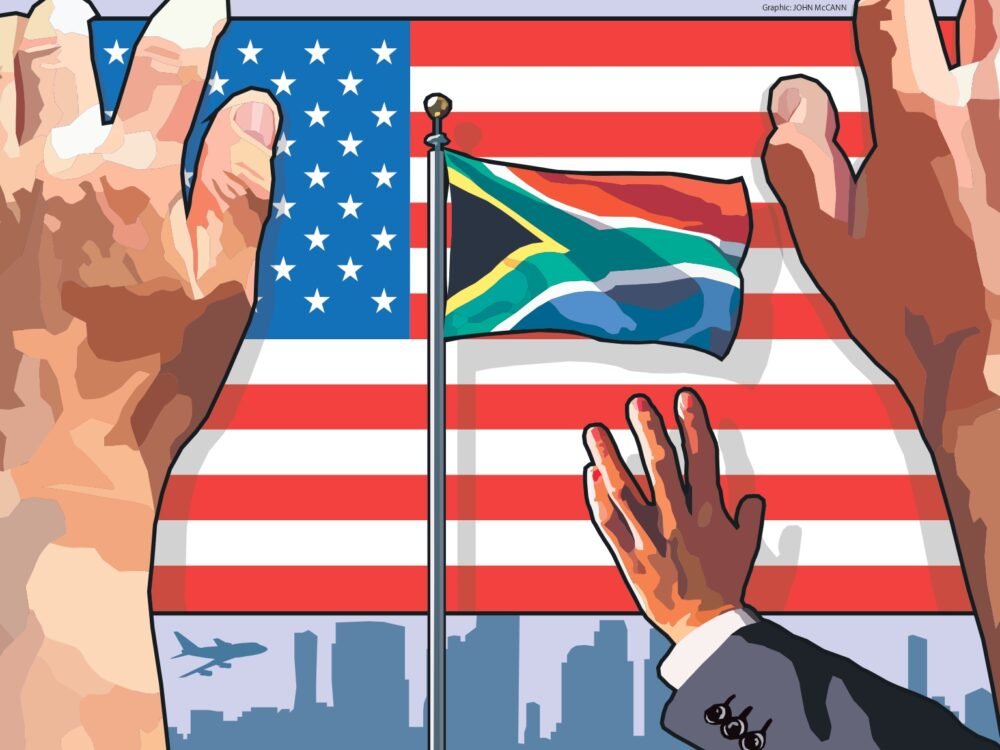
South Africa welcomed delegates, leaders, and visitors to the Johannesburg G20 Summit with more confidence than in recent years. The country stepped into the spotlight as European leaders arrived at OR Tambo, Saudi Arabia expressed new strategic intentions, and the Leaders’ Declaration was secured despite objections from former US President Donald Trump. This moment created a rare sense of triumph in the nation’s often challenging political atmosphere.
Foreign policy analysts briefly discussed a potential “Global South awakening.” Yet, as is often the case in our national politics, the celebration concealed as much as it revealed. While attention centred on those present, few paused to consider those who were not. The United States’ absence from the summit was widely read as either neglect or a sign of waning influence.
Both readings are seductive, but both are flawed. Influence does not evaporate in the absence of a flag or a handshake. It often migrates to quieter, less regulated, and more dangerous channels.
Read Full Article on Mail & Guardian
[paywall]
In those shadows, a different system of power already operates. This system now constitutes a present threat to South African sovereignty. Over the last decade, a conservative ideological network in the United States has transformed the long-discredited myth of “white genocide in South Africa” from fringe conspiracy to organising principle.
What once lurked in anonymous online forums now circulates in think tanks, congressional offices, evangelical churches, and veterans’ circles, carried by influencers and advocacy groups with direct lines to power in the Oval Office at 1600 Pennsylvania Avenue in Washington, DC.Le Monderecently called this network “an archipelago”: dispersed yet astonishingly coordinated. This narrative, which began as a marginal idea on internet message boards, has gradually infiltrated mainstream American political discourse. It is not simply a matter of misinformation spreading unchecked; it is a calculated campaign, carefully nurtured by actors who understand the power of emotional storytelling.
The myth of “white genocide” is deployed as a rhetorical weapon, simultaneously stoking fear, resentment, and a sense of urgency among segments of the American populace. The consequences of this campaign extend far beyond the borders of either nation. In South Africa, it distorts the reality of the country’s complex history and current challenges, reducing nuanced social and political struggles to a single, inflammatory narrative.
It undermines trust in domestic institutions and erodes the legitimacy of efforts to address real issues of violence, inequality, and reconciliation. In the United States, the narrative is repurposed to fuel existing political divides, providing a ready-made justification for hardline policies or reactionary movements. At the heart of this phenomenon lies a broader struggle over sovereignty and self determination.
For South Africa, the challenge is not only to refute false narratives but also to strengthen the institutions and civic culture that can withstand foreign interference. For the United States, the ease with which these myths take root speaks to a deeper malaise … a political landscape increasingly shaped by spectacle, grievance, and the relentless pursuit of power. Both countries, in their own ways, are left grappling with the fallout of a story that was never really about South Africa at all, but about the anxieties and ambitions of those who wield it.
In this network’s eyes, South Africa is less a nation than a mirror of American anxieties. Our complex history, our lived struggle for justice, and our democratic experiment are reduced to a stage for foreign culture wars. Never mind that police statistics, academic research, and even the US Embassy have dismissed the “white genocide” claim as fiction.
Myths persist not because they are true, but because they are useful. This one has become a moral pretext for a new kind of interventionism, one that does not need an embassy in the room to make itself felt. Exclusion from the Summit would not be a diplomatic gesture.
It would be a performance, crafted for a domestic audience primed for grievance politics. Behind the spectacle is a deeper reality: twenty-first-century imperialism is not focused on regime change, but regime shaping. This is not the brash interference of the past, but a subtler, more insidious project.
It reshapes institutions and incentives, exploits weaknesses, and aligns local power centres with foreign interests, all without firing a shot. South Africa, weakened by corruption and institutional decay, is now particularly vulnerable to this strategy.
[/paywall]
