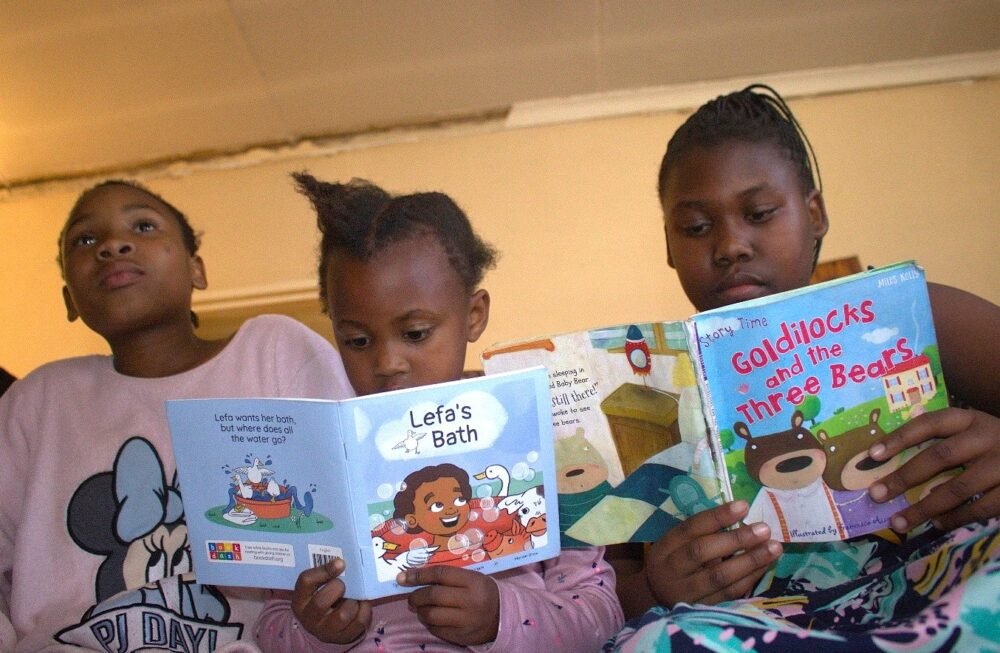
In the Masete household in Ghost Town, Makhanda, a young granddaughter, Enzokuhle, holds a baby and a book, confidently reading aloud to her siblings and cousins. It wasn’t always like this. Reading once felt like a chore, something uncomfortable and unfamiliar.
“It was a miracle,” Nokuzola Masete recalls, summoning a video from her phone as proof of the transformation that began with a simple parcel of books dropped at their gate during the height of Covid restrictions. She watches with pride as her granddaughter turns pages effortlessly, even before starting school. The Lebone Centre’s“20 books in 200 homes in 2020” campaign delivered carefully curated, age-and language-appropriate books to enigmatically named communities, including Sun City, Ghost Town, Scott’s Farm, and Vergenoeg.
The campaign drew from a2010 longitudinal study of 27 nations by Professor Mariah Evansand her colleagues, which showed that children growing up in homes with books receive three years more schooling than children from bookless homes, independent of their parents’ education, occupation and class. The researchers discovered this was as great an advantage as having university-educated rather than unschooled parents and twice the benefit of having a professional rather than an unskilled father. It holds equally “in rich nations and in poor; in the past and in the present; under communism, capitalism, and apartheid”, the study concluded.
Read Full Article on Mail & Guardian
[paywall]
Homes with at least 20 books provided a “tipping point” for literacy development, with benefits increasing in proportion to the number of books. Twenty books per household was Lebone’s initial target. Once Covid-19 restrictions eased, Lebone staff, like home visitor Kaylynne Rushin, sanitised books and their hands before delivering packages to gates in neighbourhoods where books were scarce and literacy practices rare.
Families watched from afar, but the seeds were planted. Masete describes how the centre’s advice to parents on helping children read built confidence and routine. Reading evolved from a burden to a daily joy, with her granddaughter not only reading independently but sharing stories with others.
[/paywall]
