Malawi’s external debt has surged sharply over the last decade, prompting renewed calls for stronger fiscal discipline, improved debt transparency and coordinated economic reforms to protect the country from tightening global financial conditions. The latest International Debt Report by the World Bank shows that Malawi’s external debt stock grew from $1.02 billion in 2010 to $3.6 billion in 2023, reflecting a trajectory consistent with the broader trend across developing countries where debt levels have reached historic highs. Released at a time of heightened debate in Parliament, the report highlights structural weaknesses that have left Malawi vulnerable to exchange rate shocks, rising interest costs and limited access to concessional financing.
Global trends underscore the urgency. Between 2022 and 2024, developing countries paid $741 billion more in principal and interest than they received in new loans — the widest negative financing gap in 50 years. Many turned to expensive, short-maturity borrowing, while interest rates on newly-contracted debt rose to their highest levels in two decades.
World Bank Group Chief Economist Indermit Gill said improving financial conditions should not mislead governments into complacency. “Developing countries should not deceive themselves: they are not out of danger,” he said in a press statement. “Policymakers must use the breathing room that exists today to put their fiscal houses in order — instead of rushing back into external debt markets.” For Malawi, the numbers paint a sobering picture.
[paywall]
Debt now stands at 232 percent of export earnings, one of the most challenging ratios in the region. Multilateral creditors, particularly the World Bank and IMF, account for the bulk of Malawi’s liabilities, with World Bank exposure rising from $969 million in 2019 to $1.55 billion in 2023. The report arrives as Parliament remains split on Malawi’s debt trajectory.
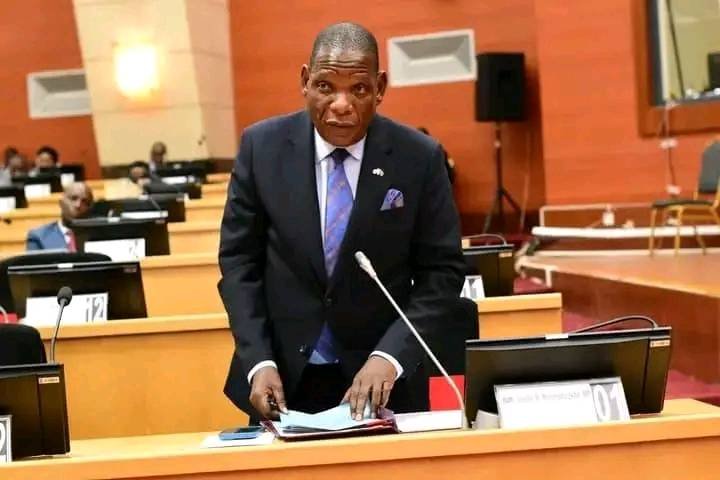
Leader of Opposition Simplex Chithyola-Banda recently told Parliament that public debt rose fivefold—from K4.1 trillion to K21.7 trillion — largely because two major devaluations inflated the kwacha value of external liabilities. His assessment sparked a heated debate, with members demanding clarity on whether policy decisions or structural weaknesses were the primary drivers of the surge. Minister of Finance, Economic Development and Decentralisation Joseph Mwanamvekha argued that the debt build-up reflects unavoidable fiscal pressures, including election spending, elevated food imports and rising interest costs.
“We cannot restore stability without difficult decisions,” he said, insisting that recent tax measures and wage-bill controls are necessary to halt further deterioration. Economists warn that unless coordinated reforms follow, rising debt may weaken Malawi’s recovery.
[/paywall]
