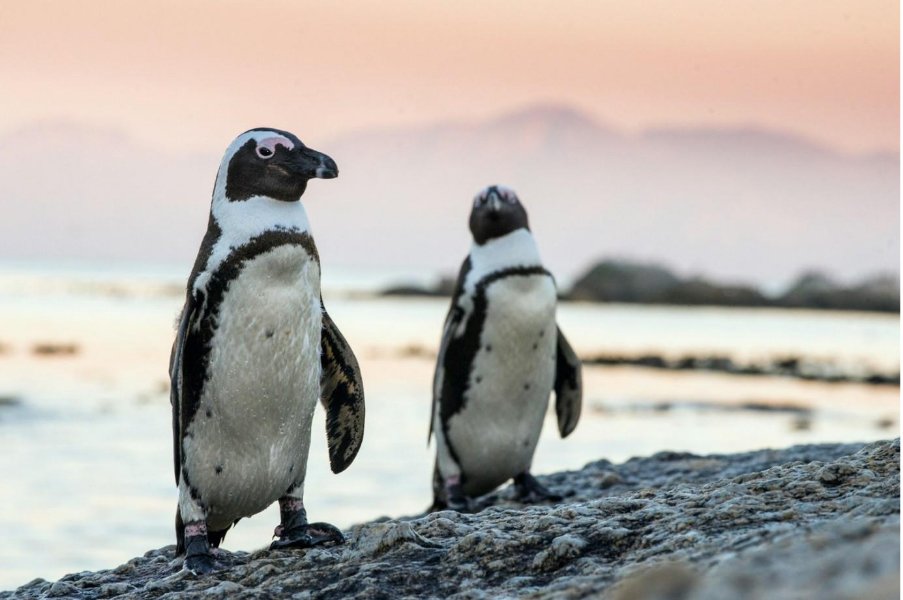
African penguinsalong South Africa’s coast havelikely starvedin large numbers during their moulting season because of collapsing food supplies, a new study reveals. At two key breeding colonies —Dassen IslandandRobben Island— researchers estimate that about 95% of African penguins that bred in 2004 died over the next eight years because of food scarcity. The findings, published this week inOstrich: Journal of African Ornithology, were produced by a team from the department of forestry, fisheries and the environment and theUniversity of Exeter.
Between 2004 and 2011, sardine stocks off western South Africa were consistently below 25% of their peak abundance, said co-author and conservation biologistRichard Sherleyfrom the Centre for Ecology and Conservation at the University of Exeter. “This appears to have caused severe food shortage for African penguins, leading to an estimated loss of about 62 000 breeding individuals,” said Sherley, whose research focus is on using long-term data on animal populations to examine human impacts on — and interactions with — the oceans. The study highlights the urgent need to restore sardine populations in critical foraging areas.
African penguins, classified ascritically endangeredlast year, rely on these fish for survival. The charismatic seabird, which is endemic to South Africa and Namibia, has lost 97% of its population. African penguins undergo a majormoult annually– usually soon after breeding – shedding and replacing all their worn-out feathers with fresh, new ones to keep up their insulation and water-proofing.
Read Full Article on Mail & Guardian
[paywall]
During the period, they came ashore for about three weeks to shed and replace all their feathers at once, the study said, detailing how moult was essential because old feathers lose their insulation and swimming efficiency. Penguins with old plumage swim slower — about 14km/h compared to 19km/h with new feathers — and use more energy to move through the water. While moulting on land, penguins also fast, losing nearly half their body weight.
Much of the weight loss comes from the muscles used for swimming, so even with fresh feathers, their maximum swimming speed is temporarily reduced to about 10km/h, roughly the same as their main prey. To prepare for this, penguins must build up fat stores before moult and rebuild their strength afterward, a process that takes about 35 days before and 42 days after moulting.
[/paywall]
