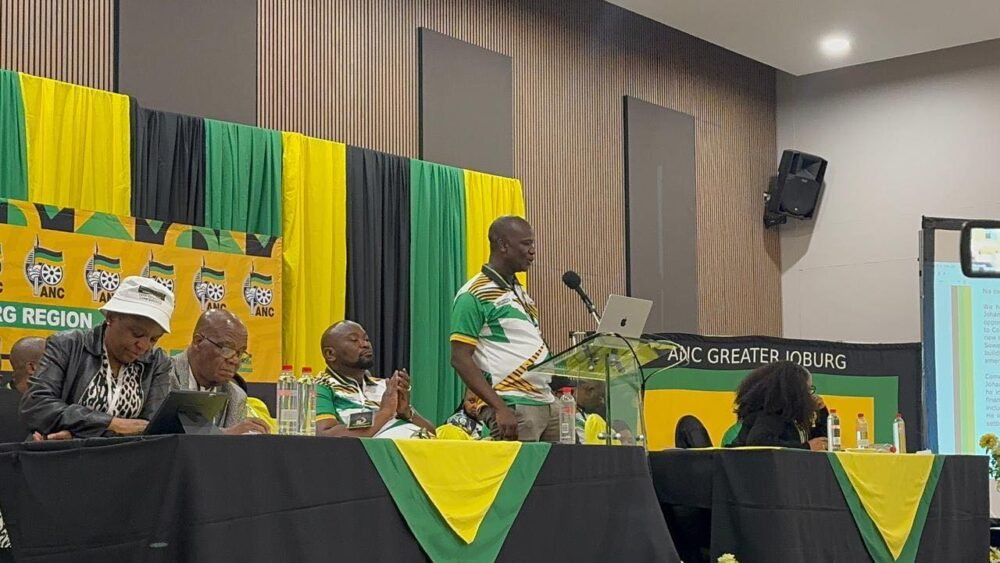
TheANCin the Johannesburg region has admitted to feeling the pressure from political parties such as theuMkhonto weSizwe(MK) party, theEconomic Freedom Fighters(EFF),Patriotic Alliance(PA),ActionSAand theDemocratic Alliance(DA) in its former strongholds ahead of next year’s local government elections. Presenting the organisational report during the party’s 16th regional conference on Thursday, outgoing secretary Sasabone Manganye warned that the decline of the ANC in the Greater Johannesburg region was not just a temporary setback but a deep, structural, and multidimensional crisis reflecting the cumulative effects of political, organisational and moral decay over several election cycles. Manganye said the erosion of trust between the ANC and its supporters had been years in the making, and its impact was now visible in every corner of the city.
A breakdown in service delivery, chronic electricity interruptions, prolonged water shortages, housing delays and irregular waste collection had devastated the public’s confidence in the party’s ability to govern, he said. “Communities have grown impatient with unfulfilled promises, and the image of the ANC has shifted from being a movement of service to being perceived as part of the problem,” Manganye told delegates. “Many residents, particularly in working-class areas such as Soweto, the Inner City, and the Deep South, now associate service collapse directly with ANC-led structures, creating an emotional disconnect that cannot be repaired by slogans alone.” In numerous wards, candidate-selection processes had become battlegrounds for competing interests rather than instruments of democracy, he said, with imposed candidates alienating communities, while disillusioned members either abstained or defected to smaller parties.
This disunity on the ground has been one of the most damaging internal dynamics, creating a situation where the ANC contests elections against itself long before facing external opponents, he said. “Equally damaging has been the crisis of moral credibility. Corruption scandals, misuse of public resources, and perceptions of personal enrichment have destroyed the moral capital that once distinguished the ANC as a people’s movement.” “Ordinary citizens now question the integrity of leaders and deployees; they see government positions as sources of personal benefit rather than service.
Read Full Article on Mail & Guardian
[paywall]
This moral drift has become one of the most profound causes of voter disillusionment, turning the struggle-era loyalty of many into silent protest at the ballot box,” he added. Manganye said the decline has also been worsened by communication failures, with the ANC in Johannesburg struggling in an era of digital politics to control its own narrative. “Achievements in service delivery, economic empowerment, and social support go unnoticed because they are neither documented nor communicated effectively. The result is that public perception, not performance, has come to define the organisation’s image,” he said.
[/paywall]
