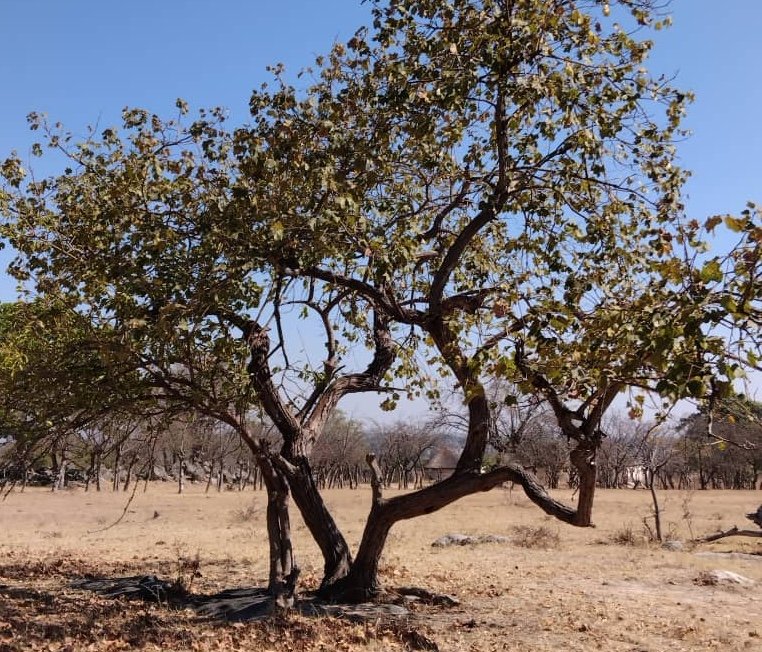
Communities in Matabeleland that once relied on natural sources for food and income are watching their resources vanish as climate change alters weather patterns. The seasonal harvest of wild fruits and mopane worms (amacimbi), once a dependable economy for rural families, has become unpredictable, cutting off vital nutrition, income and cultural continuity. Michelle Dube, a villager from Nyandeni in Gwanda, said wild fruits they used to depend on are no longer available.
“We have trees such as uxakuxaku we used to enjoy during this season of the year, we would even sell it by the roadside but this year it’s not there. Its fruits withered when they were still young. There are also wild fruits umsuma, we don’t know whether it was due to plenty rainfall as well but there are no fruits,” Dube said.
She added that trees are sprouting later than usual due to shifting weather patterns in Gwanda. In Plumtree, Mandla Tshuma, who once ran a thriving amacimbi business, said his livelihood has been destroyed. “Climate change has destroyed my business, I used to sell amacimbi and I had so many customers here in Zimbabwe, South Africa and even in United Kingdom.
[paywall]
I was overwhelmed but because of climate change amacimbi are nowhere to be seen today, they are no more in Plumtree,” Tshuma said. “We are praying and hoping that seasons might change and amacimbi will resurface again but at the moment there is no amacimbi, there is no business but customers are still there and they keep asking when they will be there because I was selling good quality macimbi. This shows that climate change is not a talk show kind of thing but it is a reality, it is affecting us and we are feeling the pinch even today.” Gender and climate change expert Zibusiso Moyo from Lupane said rural livelihoods have been heavily affected.
“Rural economy mostly depend on rainfall, subsistence farming, and we get surplus, but now it’s for eating and it’s still not enough,” she said. “Also when it comes to wild fruits, uxakuxaku, imkhemeswane and all that, it’s livelihood for rural communities but due to climate change, it has really affected the rural economy, and women bearing the brunt mostly. I think incremental adjustments are needed so that women anticipate and have early warning systems and they know what to do because this time we had a lot of rainfall, so they need that knowledge in terms of what crops to plant.” Constentine Moyo, Programmes Manager at Matobo Youth Development Initiative (MYDI) and a climate justice advocate, echoed similar concerns.
[/paywall]
