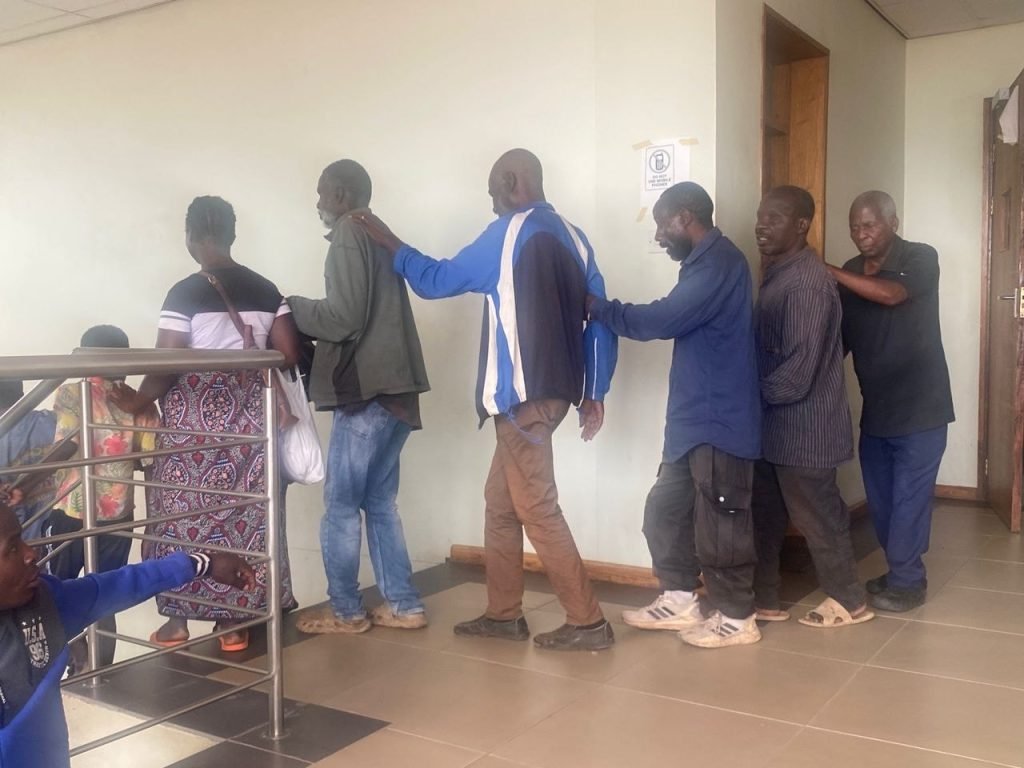
The High Court of Malawi sitting as the Constitutional Court has set January 13 2026 to start hearing a case where 13 persons with disabilities are challenging criminalisation of begging. A three-judge panel of John Mashikizo Chirwa, Anneline Kanthambi and Chimwemwe Kamowa yesterday ordered the State to file skeleton arguments within 14 days in response to the plea by the 13 applicants who were in 2017 convicted for begging in the streets of Blantyre, but were given a suspended one-week sentence. Section 180 (b) of the Penal Code makes it criminal for any “person wandering or placing himself in any public place to beg or gather alms, or causing or procuring or encouraging any child or children so to do”.
The law says such persons shall be deemed idle and disorderly, liable for the first offence to a fine of K1 000 and to imprisonment for three months and for a subsequent offence to a fine of K3 000 and to imprisonment for six months. But in their plea, Janet Chinthenga and 12 other applicants argue that criminalising begging for survival is a violation of their constitutional rights to dignity, freedom from torture, cruel and degrading punishment. Private practice lawyer Bob Chimkango, one of the lawyers representing the applicants, said in an interview that criminalising begging for alms in the street is tantamount to criminalising poverty or status.
“Where can they get employed? What type of business can they do? So, the only thing they can do to survive is to beg in the public,” he said.
[paywall]
Chimkango said one of the applicants has been begging for 47 years and that other cities had beggars too, as such, arresting only those found in Blantyre was discriminatory. Senior State Advocate in the office of the Attorney General Ndoli Chiume said the 14 days is enough for the State to prepare. The applicants were arrested at various places within Blantyre City on April 11 2017 following a sweeping exercise by the police.
The applicants, who were unrepresented at the time, were convicted by the magistrate court after pleading guilty before sentencing them to a suspended sentence of one week imprisonment with hard labour. However, this time the Southern Africa Litigation Centre and Centre for Human Rights Education, Advice and Advocacy arranged legal representation for them. Following the conviction, they asked for a judicial review at the High Court where the matter was referred to the Chief Justice for certification as a constitutional matter.
[/paywall]
